2025 · Christmas

Knecht Ruprecht & Krampus Folklore

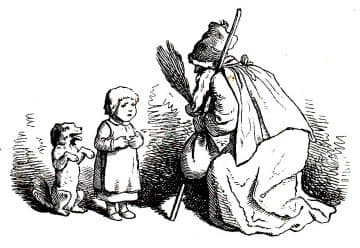
Image by Adrian Ludwig Richter (1803 – 1884)

In German folklore, Knecht Ruprecht, which translates as Farmhand Rupert or Servant Rupert, is a companion of Saint Nicholas and is possibly the most familiar. Tradition holds that he was a man with a long beard, wearing fur, or covered in pea straw. Knecht Ruprecht sometimes carried a long staff and a bag of ashes and wore little bells on his clothes.

According to tradition, Knecht Ruprecht asks children whether they know their prayers. If they do, they receive apples, nuts, and gingerbread. If they do not, he beats the children with his bag of ashes. In other (presumably more modern) versions of the story, Knecht Ruprecht gives naughty children gifts such as lumps of coal, sticks, and stones, while well-behaved children receive sweets from Saint Nicholas. He can also be known to give naughty children a switch (stick) in their shoes instead of candy, fruit, or nuts, in the German tradition.

Ruprecht was a common name for the devil in Germany, and Grimm states that “Robin fellow is the same home-sprite whom we in Germany call Knecht Ruprecht and exhibit to children at Christmas …” Knecht Ruprecht first appears in written sources in the 17th century, as a figure in a Nuremberg Christmas procession.

According to Alexander Tille, Knecht Ruprecht represented an archetypal manservant, “and has exactly as much individuality of social rank and as little personal individuality as the Junker Hanns and the Bauer Michel, the characters representative of country nobility and peasantry respectively.” Tille also states that Knecht Ruprecht originally had no connection with Christmastime.

Ruprecht sometimes walks with a limp because of a childhood injury. Often, his black clothes and dirty face are attributed to the soot he collects as he goes down chimneys. In some of the Ruprecht traditions, the children would be summoned to the door to perform tricks, such as a dance or singing a song, to impress upon Santa and Ruprecht that they were indeed good children. Those who performed badly would be beaten soundly by Servant Ruprecht, and those who performed well were given a gift or some treats. Those who performed badly enough or had committed other misdeeds throughout the year were put into Ruprecht’s sack and taken away, variously to Ruprecht’s home in the Black Forest to be consumed later or to be tossed into a river. In other versions, the children must be asleep and would awake to find their shoes filled with either sweets, coal, or, in some cases, a stick.

◊◊◊◊◊

Krampus is a terrifying figure found in parts of Austria, Bavaria, South Tyrol, Slovenia, and Croatia, most probably originating in the Pre-Christian Alpine traditions. In Tyrol, he is also called “Tuifl”.

The Feast of Saint Nicholas is celebrated in parts of Europe on December 6. On the preceding evening, Krampusnacht, the wicked, hairy devil, appears on the streets. He sometimes accompanies St. Nicholas. However, Krampus will at times be on his own, visiting homes and businesses. Saint Nicholas dispenses gifts, while Krampus supplies coal and bundles of birch branches.

Europeans have been exchanging Krampuskarten, greeting cards featuring Krampus, since the 1800s. A Krampuslauf is a run of celebrants dressed as the beast and is still quite popular; many of the participants are fortified with schnapps. Over 1200 “Krampus” gather in Schladming, Styria, from all over Austria wearing goat-hair costumes and carved masks, carrying bundles of sticks used as switches and swinging cowbells to warn of their approach. In the past few decades, village Krampus associations have paraded without St. Nicholas at Krampus events throughout late November and early December.
:https://en.wikipedia.org/wiki/Companions_of_Saint_Nicholas

2025 · Travel Tuesday

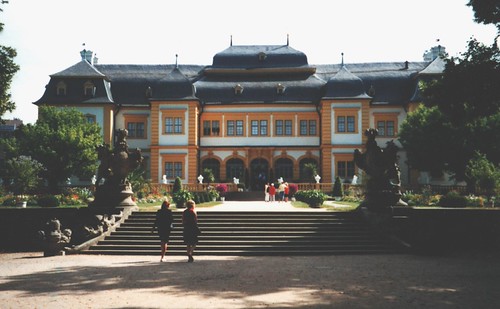
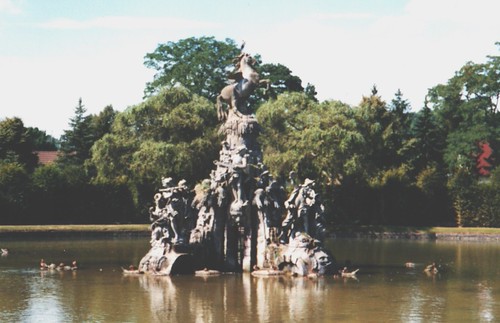
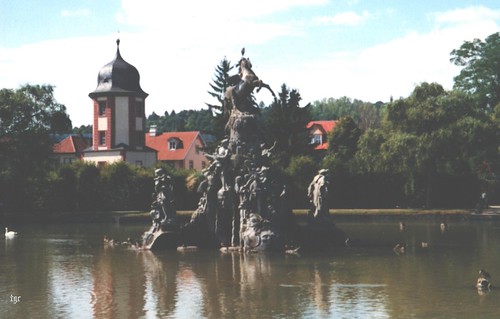
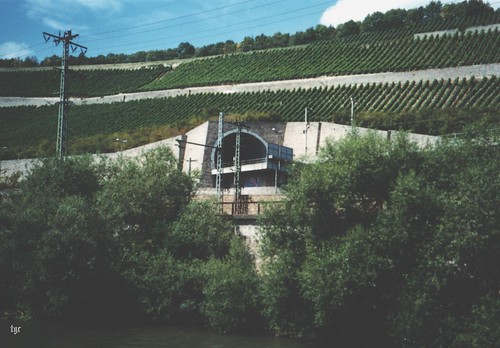
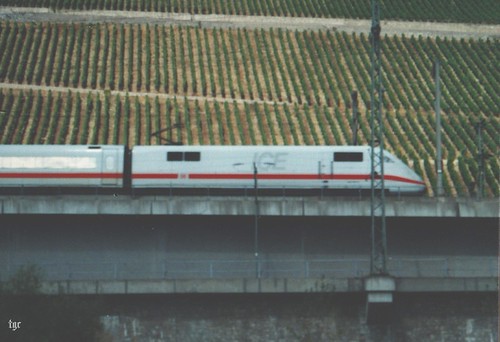
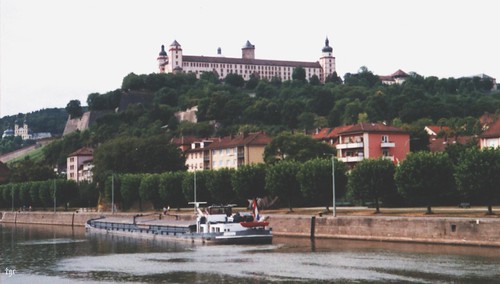
A Boat Ride From Würzburg To The Veitshöchheim Court Garden, Lower Franconia, Germany 2001

The Veitshöchheim Palace is situated on the grounds of one of the most important Rococo gardens in Germany. Until 1802, it was the Summer residence of the Prince-Bishop ofWürzburg. The summer residence was built on the site of a hunting lodge under Prince-Bishop Peter Philipp von Dernbach from 1680 to 1682 and was enlarged from 1749 to 1753 by Balthasar Neumann, who also redesigned the roof. The ceiling stucco work by Antonio Bossi also dates from this time, and the staircase sculptures were completed by Johann Peter Wagner in 1780. The castle has been owned by the Bavarian Crown since 1814 and was also used as a summer palace by the royal family in the 19th century.

◊◊◊◊◊

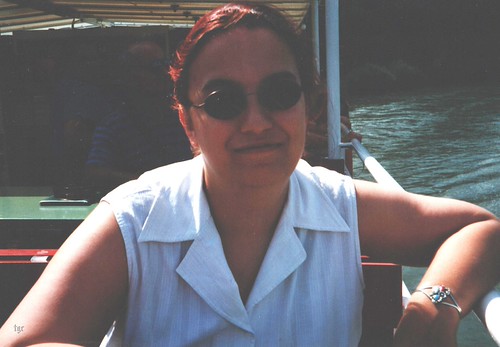
After the 4th of July, Kevin and I had a few vacation days. Since the weather was so nice, we decided to do something outdoors. So, we went to the Main River to take a boat ride from Wurzburg to Veithoechheim, approximately 5 miles (8 km) down the river.
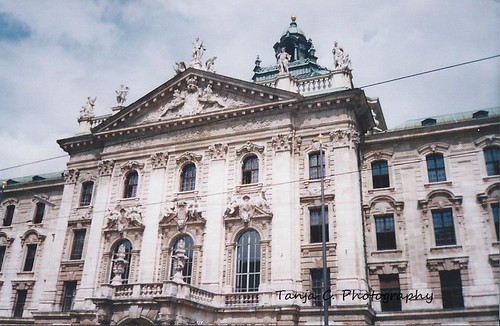
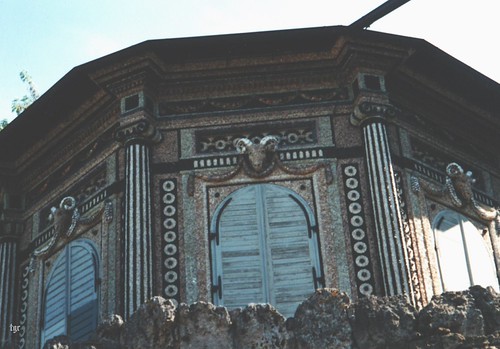
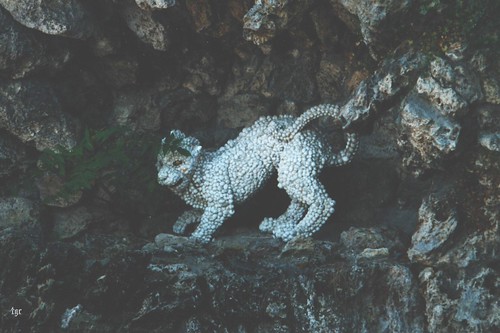
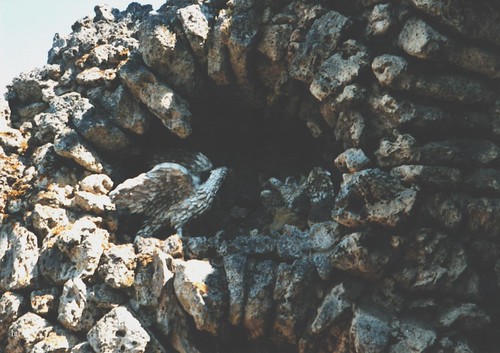
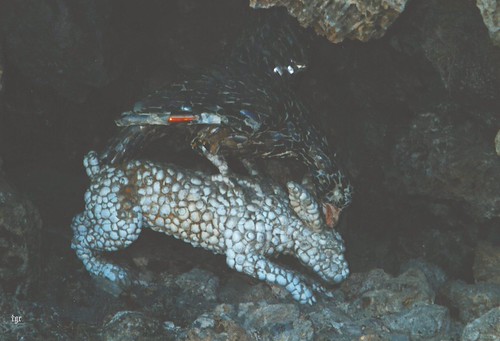
When we arrived in Veithshöchheim, I checked the boat schedule before we walked over to the Court Garden. Kevin and I were strolling around in the gardens until we arrived at the Grotto with Belvedere, where the bottom part has animal sculptures, which are made of shells and snail houses. I was always fascinated with the grotto when I was a child visiting the Court Garden. The gardens have a lot of historical sculptures of astronomical figures, poets, and many more.

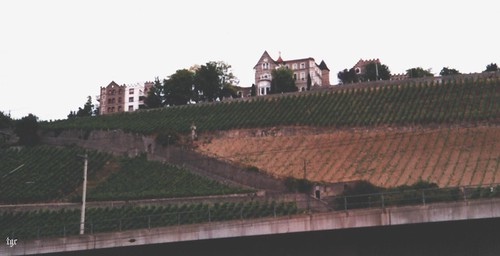
When it was time to leave, Kevin and I went to the ice cream parlor before we made our way down to the boat again. On the boat ride back to Würzburg, we had a nice view of the vineyards am Stein. This Franconian wine from these vineyards is famous all over Germany and Europe.


2025 · Travel Tuesday

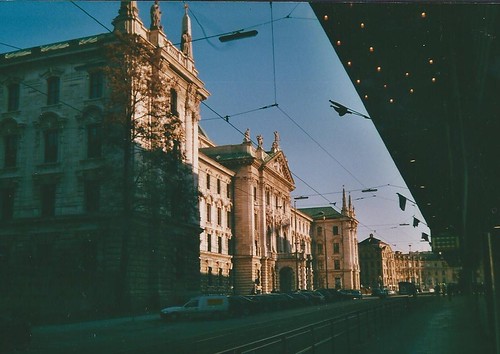
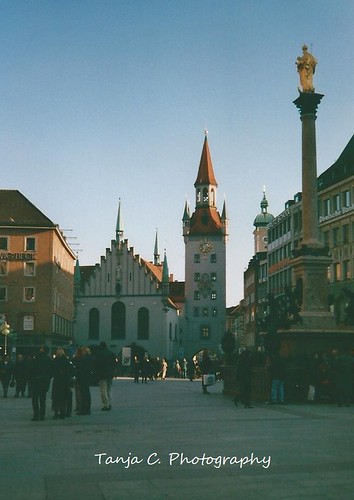
The Old Town In Munich, Germany 2001

In January 2001, I dragged Kevin to Munich with me. Since he was stationed in Germany, I wanted to make sure that the boy did some sightseeing before he went back to the US. At that time, we had been together less than a month and didn’t know we would get married 15 months later. It was cold. And we both froze our tailbones off. But we still had a lot of fun.
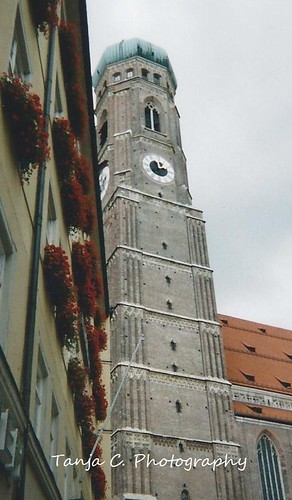
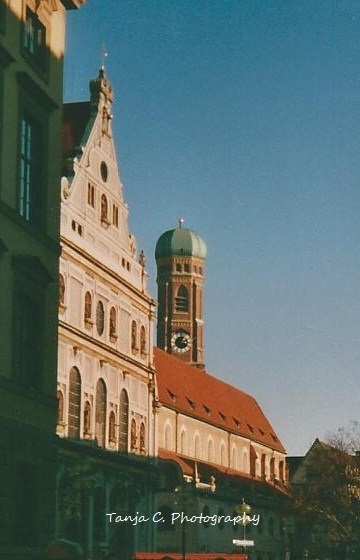
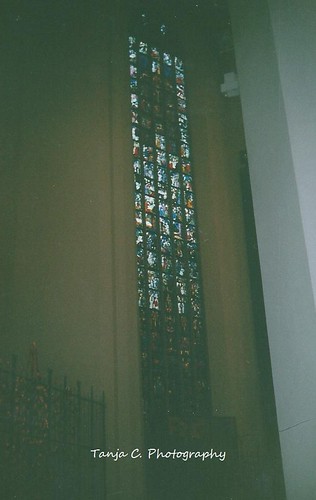
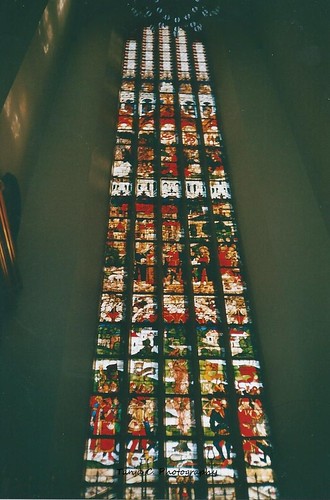
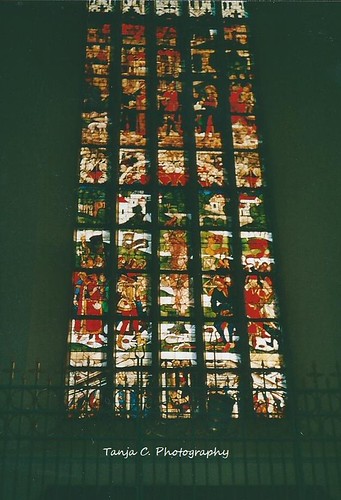
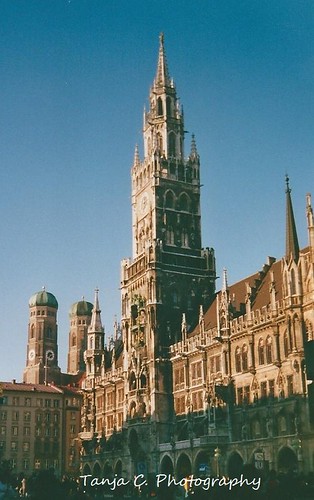
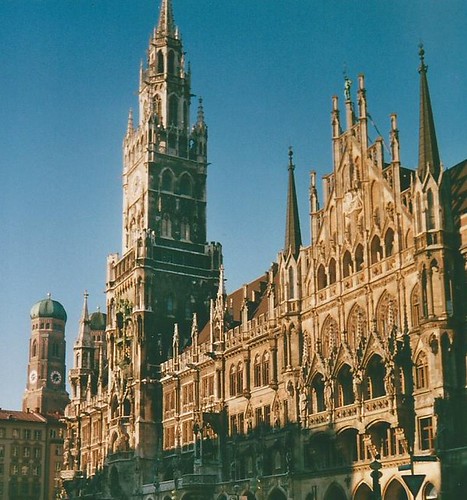
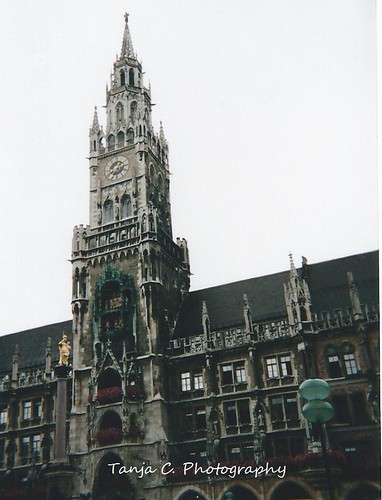
First, we went to the Frauenkirche, Munich’s Cathedral. Kevin was fascinated by how big this church is in real life. He also enjoyed looking at the stained glass window. Each of them was telling stories through pictures. At the Marienplatz, we saw the Old and the New Town Halls of Munich. https://under-the-harvest-moon.com/2025/10/21/the-old-town-in-munich-germany

The fun part was climbing the 306 stairs of the 298,5 feet (91 meters) tall “Alter Peter’s” clock tower. At 183,7 feet (56 meters) is a platform, where Munich’s old town can be viewed 360°. My knees were almost buckling due to the height. But this didn’t stop me from shooting photos across the roofs of Munich’s old town and Viktualienmarkt. The Alps can be seen from that point as well. (Unfortunately, I can’t find them anymore. I hope they are somewhere deep in a box and have not been tossed away during one of the moves in the last 20+ years.)

2025 · Travel Tuesday

The Nymphenburg Palace In Munich, Germany 2000

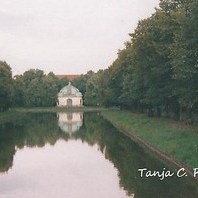
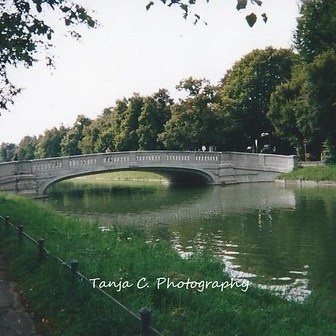
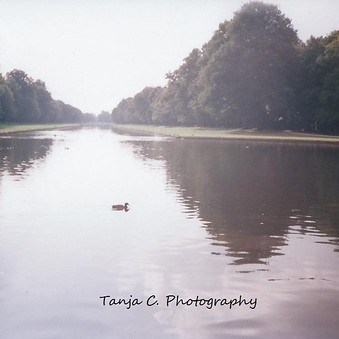
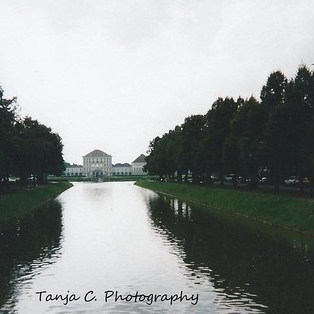
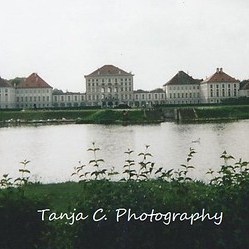
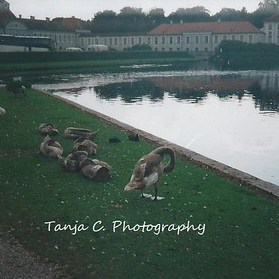
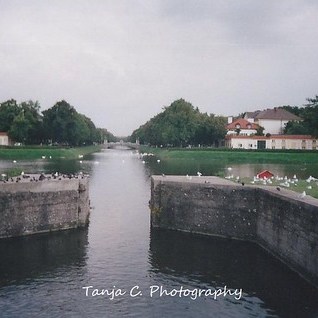
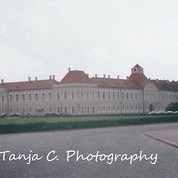
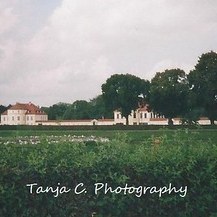
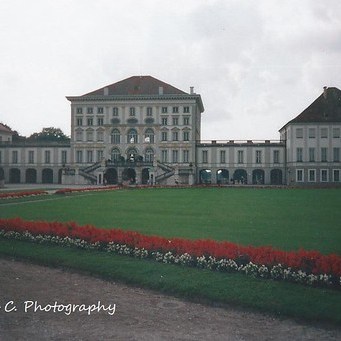
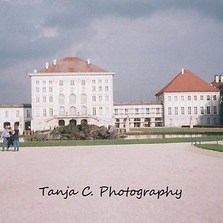
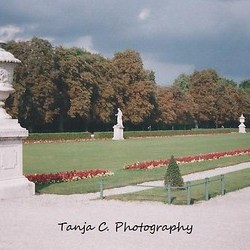
Later that day, I took the subway to the Nymphenburg Castle (Schloss Nymphenburg). I had a nice walk from the Palace Channel to the Palace itself. On my first visit, I just wanted to walk around the Palace’s garden and enjoy the nice weather and outdoors. While I was there, I got into a conversation with a local man, who pointed out the window of the room where King Ludwig II* was born in August 1845. He said Ludwig’s 155th birthday was three days ago. I laughed and answered that my birthday was three days after Ludwig’s. But I’m not that old. I turned 27 that day of my trip to Munich. It was an educational conversation about Bavaria. As a Franconian, it is nice to learn about our state’s culture and history.

*King Ludwig II of Bavaria is also referred to as the Swan King or the Fairy Tale King. During his reign, he built the Herrenchiemsee, Linderhof, and the famous Neuschwanstein Castles. Walt Disney got his idea for the Cinderella Castle from Neuschwanstein, which can be seen in every Disney Park around the world today.

~ THE END ~

2025 · Travel Tuesday

The Old Town In Munich, Germany 2000

In August of 2000, for my 27th birthday, I took a trip to Munich alone. Since we had the Bavarian Ticket, which could be purchased for less than 20 Deutsche Marks (about $11) from Monday to Friday (on the weekends, we just had to pay about $5 more to have the weekend ticket where we could travel with certain trains through all of Germany on Saturdays and Sundays) I began to make this a tradition to go to Munich more often.

On my first trip, I just enjoyed walking from the train station to the central square (Marienplatz). In that area, there are a lot of historical buildings to see. There is the Old Town Hall and the much bigger New Town Hall. If you come to visit at 11 am and 12 pm (local time), you can watch the Rathaus-Glockenspiel. From March to October, it can also be witnessed at 5 pm. The clock reenacts the scenes of Munich’s history twice daily. The first scene tells the story of the marriage of Duke Wilhelm V to Renata of Lorraine in 1568. And the second scene is the Cooper’s Dance (Schäfflertanz).

Frauenkirche (Munich’s Cathedral can be reached from Kaufinger Strasse to get to Frauenplatz, which sits northwest of the central square. At Frauenplatz is also a fountain with stairs where you can rest your feet in the hot Summer. You just have to share your space with the locals, the rock pigeons. And yes, it can get warm in Germany.

The German Hunting & Fishing Museum was very interesting as well. I was allowed to capture a photo of the taxidermied Eurasian Lynx. It was prohibited to capture photos in the museum. I believe they have changed the house rules since the use of smartphones. The museum is located in the former Augustiner Church on Neuhauser Strasse.

That day, I just strolled around and had some good ice cream before I took the subway to the Nymphenburg Palace, the birthplace of King Ludwig II.

… to be continued …

2025 · Travel Tuesday

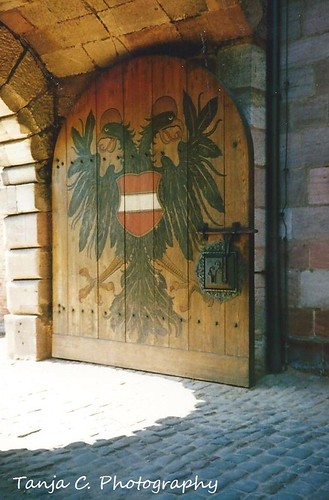
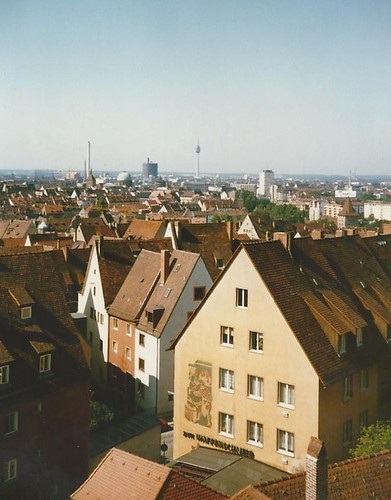
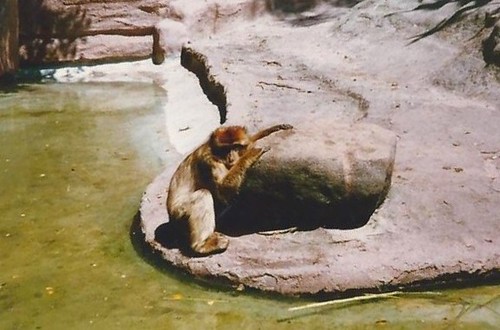
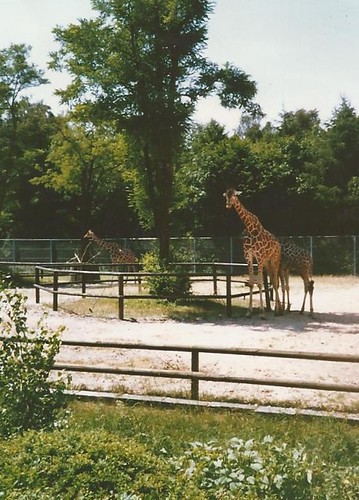
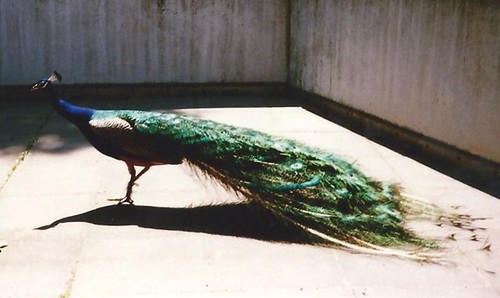
The Imperial Castle & The Zoo In Nuremberg, Franconia, Bavaria, Germany 1986 🦚

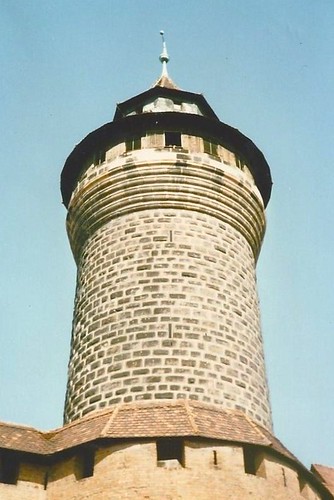
The Nuremberg Castle is a group of medieval fortified buildings situated on a sandstone ridge that dominates the historical center of Nuremberg in Bavaria, Germany. The castle, together with the city walls, is considered to be one of Europe’s most formidable medieval fortifications. It represented the power and importance of the Holy Roman Empire, as well as the outstanding role of the Imperial City of Nuremberg.

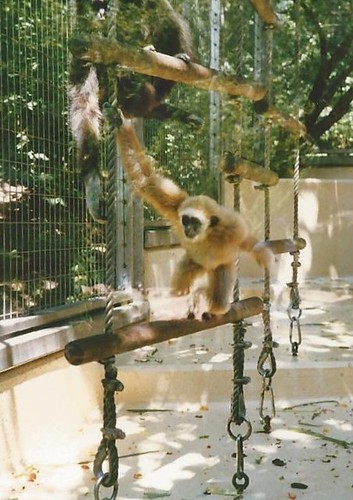
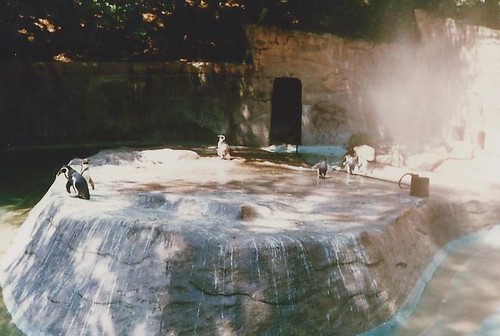
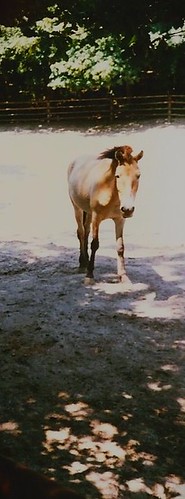
Nuremberg Zoo is a zoo located in the Imperial Forest, southeast of Nuremberg. With an area of 67 hectares (170 acres), approximately 300 animal species are kept by the zoo.

2025 · Travel Tuesday

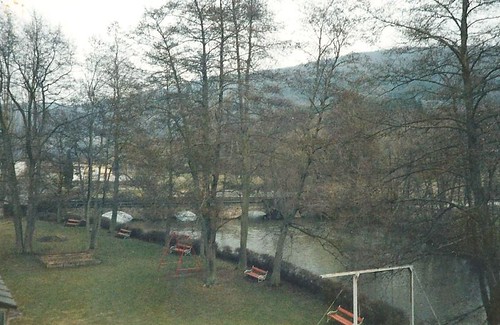
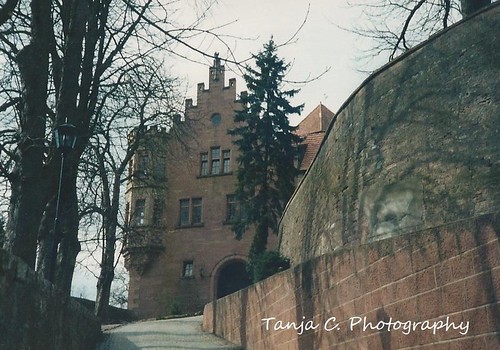
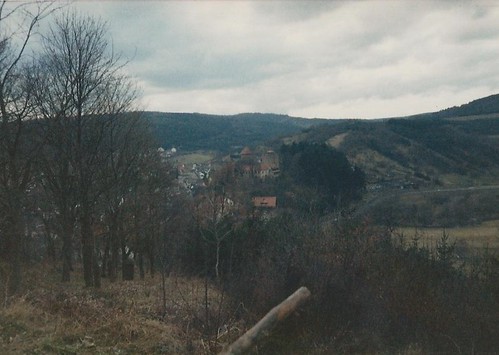
From Schaippach To The Rieneck Castle In Lower Franconia, Bavaria, Germany ~ 1986

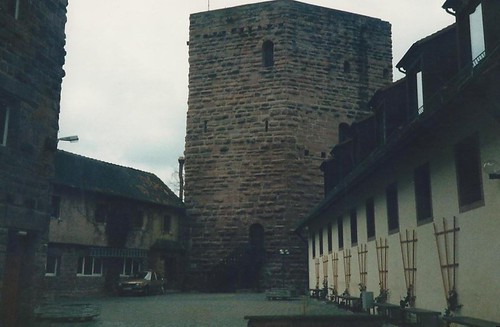
Rieneck Castle (German: Burg Rieneck) is a hill castle in the town of Rieneck, in Bavaria, southern Germany. It was built by Ludwig I, Count of Loon and Rieneck, around 1150. It is today used by the German Christian Guide and Scout Association. Rieneck Castle sits on a hill in the town of Rieneck, overlooking the Sinn River. It is located in the Spessart hills, in the Main-Spessart district of Bavaria, about 80 km east of Frankfurt.

In 1150, Ludwig I, Count of Loon and Rieneck, ordered the building of the castrum Rinecke on the northeastern boundary of his territory, intending to safeguard the lands of this aristocratic family against the neighboring lordships of Mainz, Würzburg, and Fulda. The little hill in the Sinn valley offered excellent conditions. There was only one direction where the castle required additional protection by a defensive ditch and offered as narrow a front as possible to attack. The latter can be clearly seen in the ground plan of the keep, the 19-meter-high “Thick Tower”, which is outwardly an irregular, seven-sided polygon, whose tip points towards the nearby hill. The castle complex initially consisted simply of a courtyard surrounded by defensive walls and the keep, with its 4 to 8-meter-thick walls. Inside the walls, half-timbered buildings were constructed as living quarters, store rooms, and stables. Of these, only what we now know as the “arched cellar” survives.

: https://en.wikipedia.org/wiki/Rieneck_Castle

2025 · Travel Tuesday

A School Trip To Randersacker, Germany ~ 1985

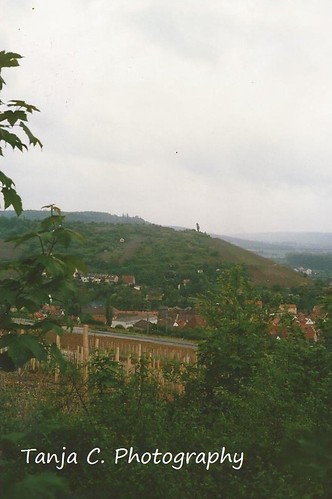
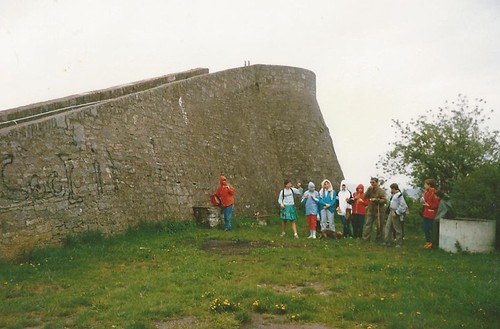
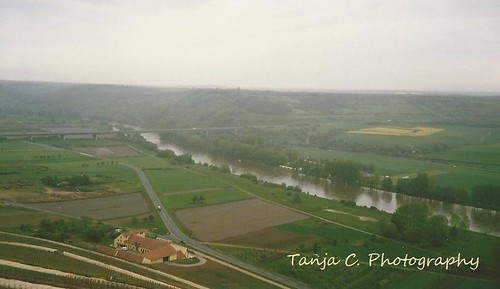
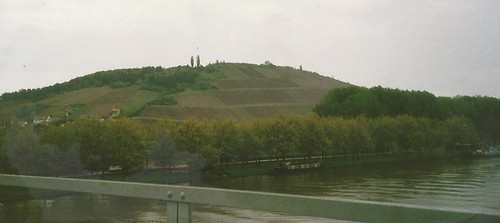
The Kartoffelturm (Potato Tower) was built before WWII to provide a great view over the Main River. The tower is located in the vineyards of Randersacker, which produce some of the best wine in Lower Franconia. The whole area is worth a hike. You can start in Würzburg and then either go alongside the Main river or directly walk through the vineyards. Wherever you look, you will see a beautiful, idyllic coexistence of nature and human life. Trees, shrubbery, and meadows are omnipresent between the river and the mountains. Once you go uphill, you can enjoy the fantastic, clean air of this region. And when you arrive at the Sonnenstuhlturm, you will have a magnificent panoramic view. In 1972, the name was changed to Sonnenstuhlturm (Sun Lounger Tower, or Sun Deck Chair Tower). However, Kartoffelturm is still the more common name for the residents of Würzburg and Randersacker.

Randersacker is located in the south of Würzburg. This part of the Main is called Maindreieck. The term refers to the course of the river, it looks similar to a triangle. The city of Würzburg is about three miles away from the village center of Randersacker. There are two subdistricts: Lindelbach and the main part, Randersacker.

2025 · Travel Tuesday

From Schaippach To Gemünden In Lower Franconia, Bavaria, Germany ~ 1985

When I was 11, my schoolmates and I went to a school camp in Schaippach an der Sinn with our teacher. In the mornings, we had regular school. But school started at 9 AM and ended at noon. And in the afternoon, we hiked several miles to learn more about regional history and geography. There was still plenty of time to hang around the building or sit in the story area and write a letter or postcard for the family at home. We also had responsibilities like taking care of the dishes for breakfast, lunch, and dinner. Make our beds and go to bed on time. Sleeping was another story when being in a room with nine other girls. After five or six days, we rode the bus back home, where our parents, in my case, grandparents, were waiting in front of the school to pick us up. At home, we had a lot of stories to tell about that week at camp.

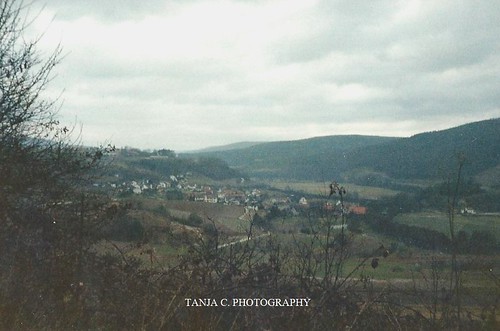
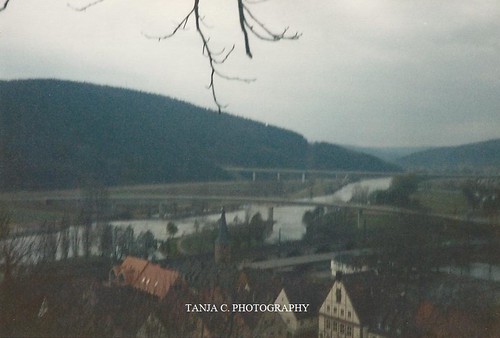
On one hike, we went from Schaippach to Gemünden. Our teacher was always talking about the merging of the rivers Sinn and Saale into the River Main (pronounced: mine). A river merging with another river into a larger river means “münden” in German. Therefore, the town at the three rivers is named Gemünden. So, we students wanted to see it and hiked to the exact place where the merging of the rivers can be viewed from that spot.

Gemünden is about 25 miles (40 km) NNE down the river from my hometown, Würzburg, and located in the region of Main-Spessart in Lower Franconia, Northern Bavaria, Germany.

2025 · Travel Tuesday

A Late Summer Hike In Guttenberger Wald ~ 1984

When I began 5th grade, I had a teacher who loved to hike. So, a lot of times we had school outdoors by hiking to places from Würzburg to Randersacker, to Frankenwarte, and many other outdoor places. Rain or shine, we hiked instead of sitting in a stuffy classroom all year.

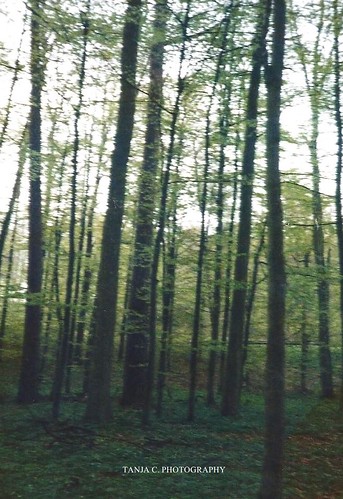
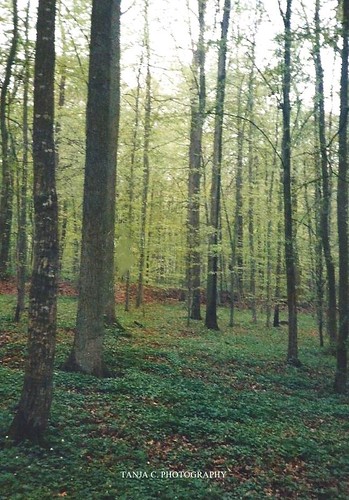
One place we went to was the Guttenberger Wald, which is an unincorporated forest near the Reichenberg/Höchberg area in the district of Würzburg, Germany. The Guttenberger Wald has an area of 18.05 km² (4480 acres) and is 362 meters (1188 feet) above sea level. It is a nice and quiet place away from the city.

2025 · Travel Tuesday

An Easter Trip To Lake Constance (Bodensee), Germany ~ 1984

The Easter weekend in 1984, my Mom and my stepfather got their RV ready to take a trip to the Neuschwanstein Castle in Füssen. But we changed our minds on the road and decided to go to Lake Constance instead. The first night we spent in Memmingen was in a parking lot. After breakfast, we went to our destination. And in the afternoon, we arrived in Lindau. Mom purchased a 35mm film for my first camera, which she handed down to me before our trip. It was a hand-me-down. Still being 10 years old, I didn’t need the newest, most expensive model to learn how to capture photos. So, a snap-and-shoot did the job.

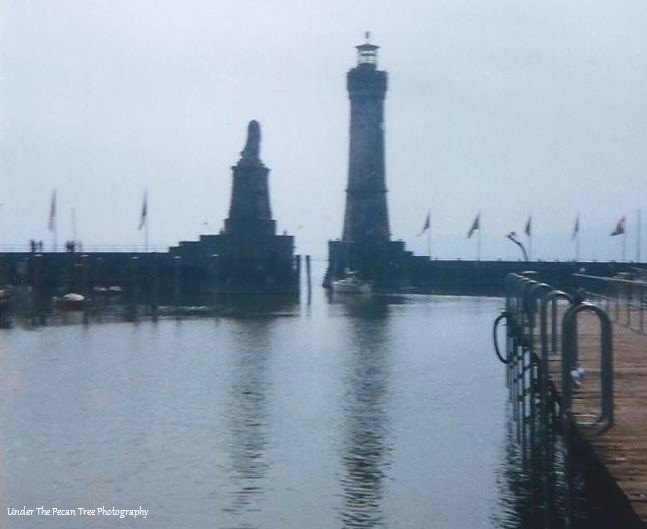
Once we had everything we needed, we went to the Lindau Harbor and looked at boats coming in from Meersburg, Friedrichshafen, Austria, and Switzerland. The harbor is a Landmark with its southernmost lighthouse in Germany. Lake Constance borders two German states (Bavaria and Baden-Würtemberg) and three countries Germany, Austria, and Switzerland). In the evening, we had dinner on the island while the RV was parked on the mainland.

The following morning, we drove to Meersburg and took a boat to the Island of Mainau. Mainau is a Botanical Garden on the lake, not far from Constance (German: Konstanz). I was fascinated by all these tropical fruits inside the greenhouse. The banana plants were so high, and the fruits were hanging from them. That’s mainly what I can remember from Mainau.

After spending the night in Meersburg, we made a stop in Kempten and spent the night there before we drove home on Easter Monday. In Germany, Easter is on two days: Easter Sunday and Easter Monday. We had plenty of time to get back home. Mom was on vacation, and I was on Spring Break for the rest of the week. So, we could relax after this trip.