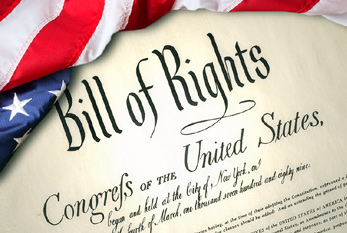
The Bill of Rights Day is observed on December 15 in the United States. It’s an important day to celebrate America’s Constitution and the framework of society that ascribes rights and freedoms to society. Bill of Rights Day commemorates the ratification of the first 10 amendments to the U.S. Constitution, with the National Archives documenting its many celebrations of the day. The Bill was introduced by James Madison, who later became the fourth President of the United States. Now, the Bill of Rights is displayed in the Rotunda of the National Archives Building in Washington, D.C., as a reminder to all Americans of their constitutional freedoms.
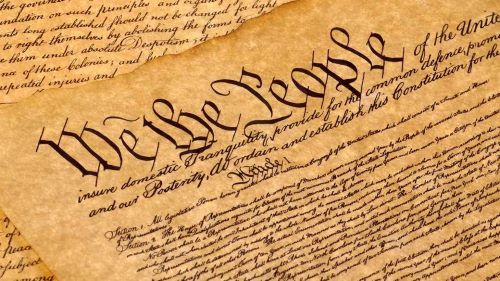
After the American Revolution freed the American colonies from British rule, the Founding Fathers sought to ensure that the new government would not abuse its power. At the 1787 Constitutional Convention, delegates from twelve of the thirteen new states gathered to draft the document that would serve as the basis of all future U.S. law. The Constitution establishes three branches of government with equal powers, creating a system commonly referred to as “checks and balances.” Each branch has the power to mitigate the others. Powers not assigned to one of the three branches are left to the individual states.
Delegates at the Convention had two options for setting up the framework of the new legislative branch. The Virginia Plan, predictably supported by larger states, called for representation based on population. The competing New Jersey Plan called for equal representation for each state. The two-house solution known as the Great Compromise combines aspects of both plans and is still in use today. The Constitution also outlines the responsibilities and powers of the judicial and executive branches, how the President is elected, and other nitty-gritty details.
The Founding Fathers recognized that society evolves and that the Constitution would require a mechanism for making changes. However, they wanted to ensure that making changes would require agreement from a large number of states. A proposed amendment must be ratified by three-fourths of the states to alter the Constitution. In 1940, Congress and the President passed a resolution creating “I Am an American Day,” observed on the third Sunday in May. In 1952, the holiday was renamed to “Constitution Day” and moved to September 17, the day in 1787 that the Constitution was signed. More than 50 years later, in 2004, Congress changed the name to Constitution Day and Citizenship Day.
American Citizen since January 12, 2017, Irving, Texas

 Under The Harvest Moon