


Liberty By The Lake 2011




A Texas city girl in a small New England town …

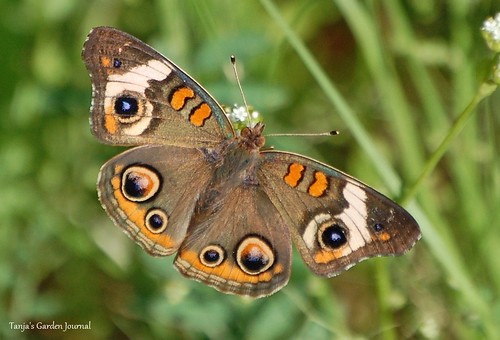
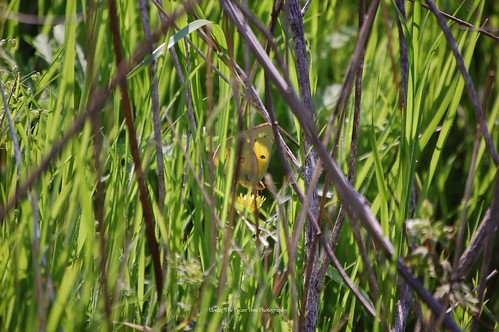
Junonia coenia, known as the common buckeye or buckeye, is a butterfly in the family Nymphalidae. Its range covers much of North America and some of Central America, including most of the eastern half of the US, the lower to middle Midwest, the Southwest (including most of California), southern Canada, and Mexico. Its habitat is open areas with low vegetation and some bare ground. Its original ancestry has been traced to Africa, which then experienced divergence in Asia. The species Junonia grisea, the gray buckeye, is found west of the Rocky Mountains and was formerly a subspecies of Junonia coenia.
Caterpillars of these butterflies appear to prefer plants that produce iridoid glycosides, which are bitter compounds that release a hormone called gastrin that activates the digestive system (i.e., hunger); therefore, iridoid glycoside-producing plants stimulate and attract their appetites, particularly when found in plants like Plantago lanceolata. In fact, these metabolites may trigger oviposition behaviors in female butterflies so that descendant larval bodies may better incorporate iridoid glycosides. Iridoid glycoside metabolites appear to have a growth-stimulating effect on caterpillars but a growth-reducing effect on predators. Predators like ants, wasps, birds, and small animals prefer to feed on iridoid glycoside-poor caterpillars rather than iridoid glycoside-rich larvae, potentially due to these effects. Therefore, the immunity of Junonia coenia larvae to predators like ants appears to be strongly related to the concentration of iridoid glycosides sequestered in their bodies. However, excessive intake of iridoid glycosides in the diet can impair these larvae’s immune response and increase susceptibility to parasitism.
Adult butterflies feed on flowers with certain pollinator cues: yellow flowers that are ‘pre-change’, or flowers whose color has not been changed due to insect visitation or other factors. Common buckeye caterpillars feed in isolation rather than relying upon grouping behaviors. Vulnerability to the Junonia coenia densovirus is another concern for the survivorship of common buckeye larvae.







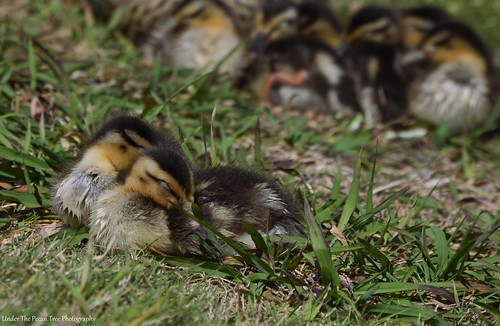
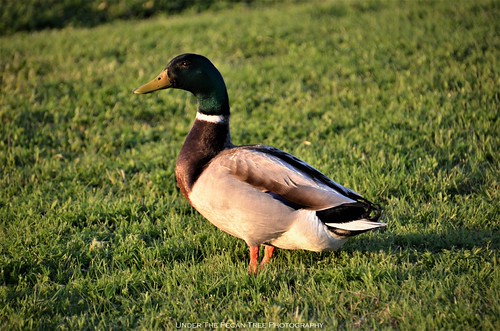
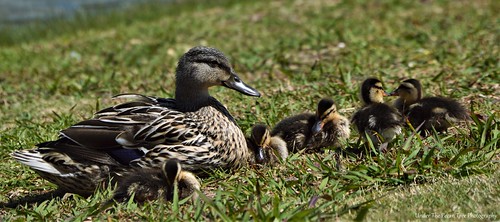
If someone at a park feeds bread to ducks, there are Mallards in the fray. Perhaps the most familiar of all ducks, Mallards occur throughout North America and Eurasia in ponds, parks, wilder wetlands, and estuaries. The male’s gleaming green head, gray flanks, and black tail curl arguably make it the most easily identified duck. Mallards have long been hunted for the table, and almost all domestic ducks come from this species.
 Under The Harvest Moon