2026 · National Day Calendar

National Bubble Bath Day 2026

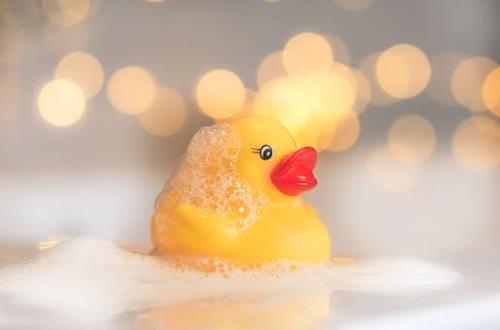
Bubble Bath with Rubber Ducky

Dust off your rubber ducky this winter because it’s National Bubble Bath Day on January 8! A lot of us remember bubble baths from our childhoods, and if you’ve never had a bubble bath before, then this is definitely a holiday you should try out. The soapy bubbles of these foaming baths are luxurious and ideal for pampering yourself after a hard day. There’s nothing quite like slipping into the hot water of a bubble bath for a nice, relaxing soak in the tub. But let’s be honest, when was the last time you had a bubble bath? Most of us hop into the shower in the morning and zip off to start our day. We barely even take the time to eat breakfast, let alone spend an hour sitting in the tub getting pruned fingers. Showers may be convenient, quick, and easy, but you can’t relax as well standing up, and everybody deserves a little me-time now and then. A hot bubble bath will relax your muscles, refresh your skin, and help with any congestion you might have. It will even clean your bathtub! For National Bubble Bath Day, join us in celebrating the healthful benefits and all-out luxury of these sudsy soaks.
:https://nationaltoday.com/national-bubble-bath-day/

2026 · National Day Calendar

Earth’s Rotation Day 2026 💫

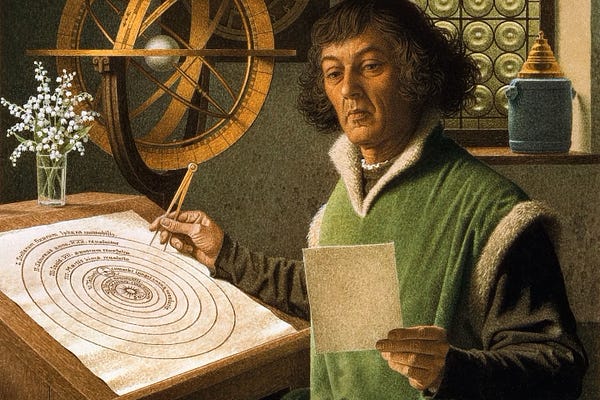
Nicolai Copernicus

The rotation of the Earth and its relationship to our daylight cycles have fascinated philosophers and scientists for thousands of years. As far back as 470 BCE, ancient Greeks speculated that the Earth itself moves, rather than having the rest of the sky revolving around us. In the 10th century CE, Muslim astronomers began building astrolabes and other instruments to measure the Earth’s motion relative to the stars. 

The first human depictions of the cosmos date back to 1,600 BCE. A bronze disk found in Northern Europe depicts the sun, a crescent moon, and the Pleiades star cluster, and Babylonian written records record the positions of celestial bodies. Arguably, the earliest scientific observations, these records make astronomy the oldest known science.

Although humans have observed the stars for thousands of years, some early theories proposed that the Earth moved — the geocentric theory remained dominant in Europe until the work of Nicolaus Copernicus in the 1500s, proving the Earth does actually revolve around the sun. Following his work, others tried to prove the rotation of the Earth through various experiments. While the theory became accepted by the mid-1800s through observation of astronomical movements, it was Foucault’s pendulum that demonstrated, visibly and spectacularly, the rotation of the Earth.

Foucault first conducted his pendulum experiment in the Paris Observatory, then the Panthéon, where it remains an impressive centerpiece today. While they vary in size, pendulums work best with long lines, typically between 40 and 100 feet. A heavy, swinging lead bob is suspended at the end of a line. As the bob swings back and forth, it slowly moves in a clockwise direction as the Earth rotates under it.

:https://nationaltoday.com/earths-rotation-day/