
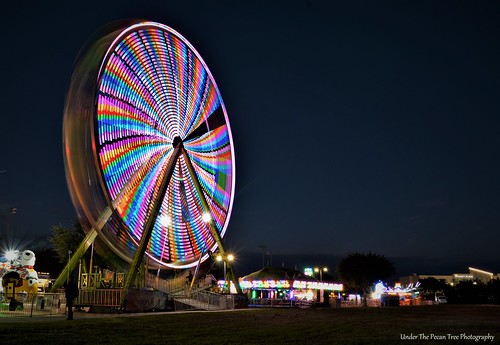
The existence of fun fairs was first noted in 500 B.C. in the book of Ezekiel. Fairs were viewed as commercial events where early trading with foreign merchants began. Merchants would come from distant countries to trade their native wares. Religious activity has also been linked to fairs. The Latin word ‘feria’, meaning ‘holy day’ is the logical root word of ‘fair.’ Worship in the early days was centered around temples in great cities, and these cities also had great commercial centers. These were spaces found adjacent to the temples where traders and religious figures could gather. These gatherings made it possible for a wide range of commodities to be sold or bartered. While this was going on, other forms of activities and entertainment also took place, and this is how the fairs we know today came to be.
The First American fair was held at Windsor, Nova Scotia, in 1765, and in 1792, a fair in Ontario was held. These fairs still operate today. Elkanah Watson initiated the concept of the county fair. He was given the title ‘Father of U.S. Agricultural Fairs’ for organizing the Berkshire Agricultural Society and creating the Cattle Show in Pittsfield, Massachusetts, in 1811. This cattle show was a competition where prize money was up for grabs. He also helped many communities organize shows. By 1819, most countries in America organized their own agricultural societies. Today, more than 2,000 fairs are held in North America every year, and many agricultural fairs are held in the U.K., Australia, Mexico, and other countries.







 Under The Harvest Moon