
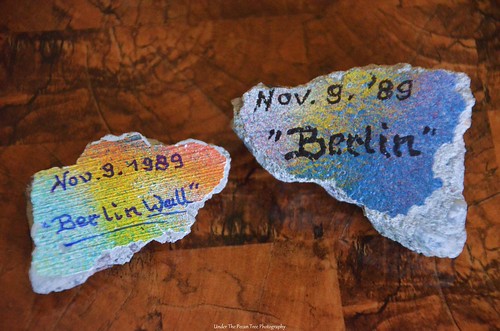
The Berlin Wall was a guarded concrete barrier that encircled West Berlin from 1961 to 1989, separating it from East Berlin and the German Democratic Republic (GDR; East Germany). The construction of the Berlin Wall was commenced by the government of the GDR on 13 August 1961. It included guard towers placed along large concrete walls, accompanied by a wide area (later known as the “death strip”) that contained anti-vehicle trenches, beds of nails, and other defenses. The primary intention for the Wall’s construction was to prevent East German citizens from fleeing to the West.
The Soviet Bloc propaganda portrayed the Wall as protecting its population from “fascist elements conspiring to prevent the will of the people” from building a communist state in the GDR. The authorities officially referred to the Berlin Wall as the Anti-Fascist Protection Rampart. Conversely, West Berlin’s city government sometimes referred to it as the “Wall of Shame”, a term coined by Mayor Willy Brandt about the Wall’s restriction on freedom of movement. Along with the separate and much longer inner German border, which demarcated the border between East and West Germany, it came to symbolize physically the Iron Curtain that separated the Western Bloc and Soviet satellite states of the Eastern Bloc during the Cold War.
Before the Wall’s erection, 3.5 million East Germans circumvented Eastern Bloc emigration restrictions and defected from the GDR, many by crossing over the border from East Berlin into West Berlin; from there they could then travel to West Germany and to other Western European countries. Between 1961 and 1989, the deadly force associated with the Wall prevented almost all such emigration. During this period, over 100,000 people attempted to escape, and over 5,000 people succeeded in escaping over the Wall, with an estimated death toll of those murdered by East German authorities ranging from 136 to more than 200 in and around Berlin.
In 1989, a series of revolutions in nearby Eastern Bloc countries (Poland and Hungary in particular) and the events of the “Pan-European Picnic” set in motion a peaceful development during which the Iron Curtain largely fell, and rulers in the East came under public pressure to cease their repressive policies. After several weeks of civil unrest, the East German government announced on 9 November 1989 that all GDR citizens could visit the FRG and West Berlin. Crowds of East Germans crossed and climbed onto the Wall, joined by West Germans on the other side, and souvenir hunters chipped away parts of the Wall over the next few weeks. The Brandenburg Gate, a few meters from the Berlin Wall, reopened on 22 December 1989, with the demolition of the Wall beginning on 13 June 1990 and concluding in 1994. The fall of the Berlin Wall paved the way for German reunification, which formally took place on 3 October 1990.
“… Mr. Gorbachev, tear down this wall!” – President Ronald Reagan ~ 06/12/1987
 Under The Harvest Moon