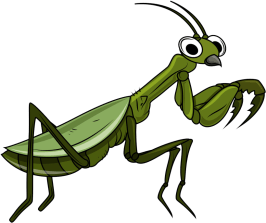
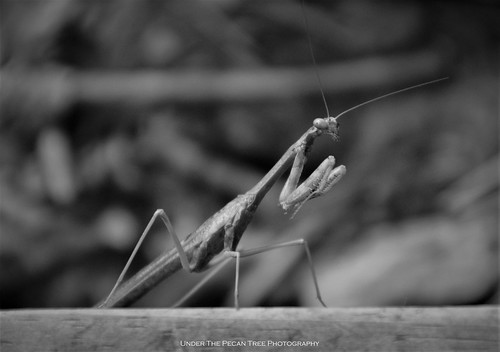
The European mantis is a large insect in the family of the Mantidae (‘mantids’), which is the largest family of the order Mantodea (mantises). Their common name, praying mantis, is derived from the distinctive posture of the first pair of legs that can be observed in animals in repose. It resembles a praying attitude. Both males and females have elongated bodies with two pairs of wings. The most striking features that all Mantodea share are a very mobile, triangular head with large compound eyes and their first pair of legs (the ‘raptorial legs’), which are highly modified for the efficient capture and restraint of fast-moving or flying prey. In Germany, the European Mantis is listed as Gefährdet [endangered] on the German Red List based on an assessment from 1998. It is not supposed to be caught or held as a pet. At a global level, it is assessed by the IUCN as of least concern.
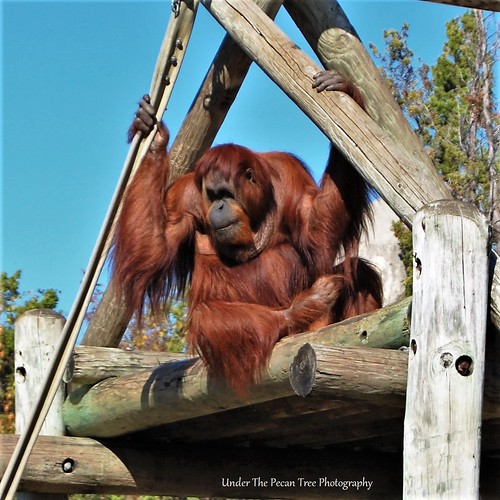
The exact year that International Orangutan Day was established is uncertain. The day is marked, however, to save species that are on the edge of extinction. The goal of International Orangutan Day is to raise awareness about the predicament of this species, which has progressed from endangered to critically endangered. Orangutans have been around for millions of years and are thought to be the ancestors of gorillas. They are large apes that spend the majority of their time in trees and are only found in the jungles of Borneo and Sumatra. The two species that live there were formerly thought to be the same.
Further research has shown that they are two distinct species that separated some 400,000 years ago. Orangutans have enormous arm lengths that reach about seven feet from tip to tip, which is impressive given that they only stand around five feet above the ground. When orangutans stand up straight, their hands are almost touching the ground. Their long arms complement their arboreal lifestyle, letting them move from tree to tree and construct shelters from the canopy’s massive leaves. Because orangutans spend 90 % of their time in the treetops looking for food, deforestation is highly damaging to them. Orangutans are mostly herbivores, but omnivorous orangutans will eat bark, insects, and even meat if available.
The tropical rainforest had been destroyed due to the farms’ improper management. Furthermore, the farmers consider the orangutans to be a nuisance and either kill them or burn the forest down. There have only been 20,000 survivors since 2006, but there should be more now. As a result, deforestation is the fundamental cause of such a tiny number of orangutans, and if it continues, the big apes will become extinct sooner. Raising awareness by commemorating International Orangutan Day can assist in increasing the possibility of this endangered species being rescued.
Unfortunately, humans are the greatest threat to the survival of orangutans. Deforestation, for example, encroaches on their habitat. In addition, illicit hunting claims the lives of 3,000 orangutans each year. Some wildlife specialists believe the orangutan will become extinct in the wild over the next 50 years. However, several organizations are working to conserve orangutans. The Centre for Orangutan Protection, the Sumatran Orangutan Society, The Orangutan Project, Orangutan Outreach, and the Humane Society are a few of these organizations.

 Under The Harvest Moon