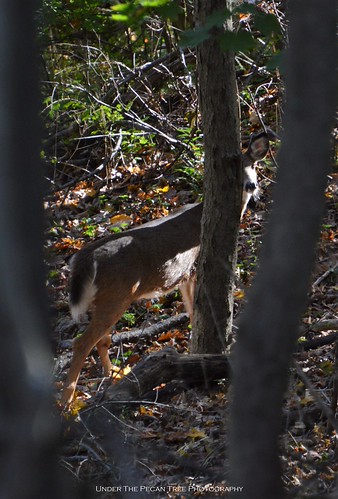
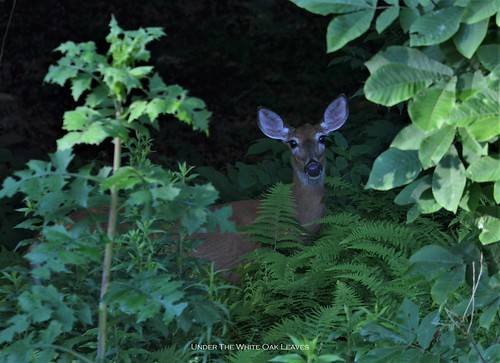
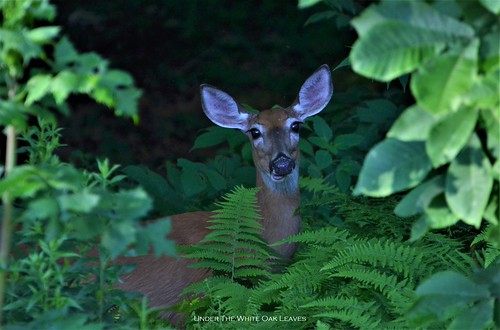
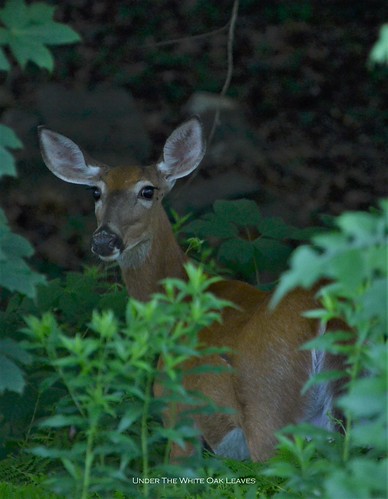
The white-tailed deer, also known commonly as the whitetail and the Virginia deer, is a medium-sized species of deer native to North America, Central America, and South America as far south as Peru and Bolivia, where it predominantly inhabits high mountain terrains of the Andes. It has also been introduced to New Zealand, all the Greater Antilles in the Caribbean (Cuba, Jamaica, Hispaniola, and Puerto Rico), and some countries in Europe, such as the Czech Republic, Finland, France, Germany, Romania, and Serbia. In the Americas, it is the most widely distributed wild ungulate.
In North America, the species is widely distributed east of the Rocky Mountains as well as in southwestern Arizona and most of Mexico, except Lower California. It is mostly displaced by the black-tailed or mule deer (Odocoileus hemionus) from that point west, except for mixed deciduous riparian corridors, river valley bottomlands, and lower foothills of the northern Rocky Mountain region from Wyoming west to eastern Washington and eastern Oregon, and north to northeastern British Columbia and southern Yukon, including in the Montana valley and foothill grasslands. The westernmost population of the species, known as the Columbian white-tailed deer, was once widespread in the mixed forests along the Willamette and Cowlitz River valleys of western Oregon and southwestern Washington, but current numbers are considerably reduced, and it is classified as near-threatened. This population is separated from other white-tailed deer populations.
Texas is home to the most white-tailed deer of any U.S. state or Canadian province, with an estimated population of 5.3 million. High populations of white-tailed deer exist in the Edwards Plateau of central Texas. Michigan, Minnesota, Iowa, Mississippi, Missouri, New Jersey, Illinois, Wisconsin, Maryland, New York, North Dakota, Ohio, and Indiana also boast high deer densities. The conversion of land adjacent to the Canadian Rockies to agricultural use and partial clear-cutting of coniferous trees, resulting in widespread deciduous vegetation, has been favorable to the white-tailed deer and has pushed its distribution to as far north as the Yukon. Populations of deer around the Great Lakes have expanded their range northwards, also due to the conversion of land to agricultural use, with local caribou, elk, and moose populations declining. White-tailed deer are crepuscular, meaning they are most active during the dawn and dusk hours.
:https://en.wikipedia.org/wiki/White-tailed_deer





 Under The Harvest Moon