2025 · Christmas

Knecht Ruprecht & Krampus Folklore

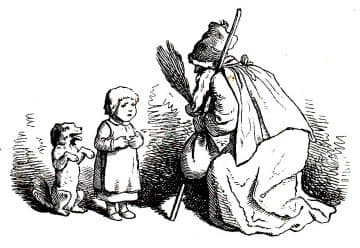
Image by Adrian Ludwig Richter (1803 – 1884)

In German folklore, Knecht Ruprecht, which translates as Farmhand Rupert or Servant Rupert, is a companion of Saint Nicholas and is possibly the most familiar. Tradition holds that he was a man with a long beard, wearing fur, or covered in pea straw. Knecht Ruprecht sometimes carried a long staff and a bag of ashes and wore little bells on his clothes.

According to tradition, Knecht Ruprecht asks children whether they know their prayers. If they do, they receive apples, nuts, and gingerbread. If they do not, he beats the children with his bag of ashes. In other (presumably more modern) versions of the story, Knecht Ruprecht gives naughty children gifts such as lumps of coal, sticks, and stones, while well-behaved children receive sweets from Saint Nicholas. He can also be known to give naughty children a switch (stick) in their shoes instead of candy, fruit, or nuts, in the German tradition.

Ruprecht was a common name for the devil in Germany, and Grimm states that “Robin fellow is the same home-sprite whom we in Germany call Knecht Ruprecht and exhibit to children at Christmas …” Knecht Ruprecht first appears in written sources in the 17th century, as a figure in a Nuremberg Christmas procession.

According to Alexander Tille, Knecht Ruprecht represented an archetypal manservant, “and has exactly as much individuality of social rank and as little personal individuality as the Junker Hanns and the Bauer Michel, the characters representative of country nobility and peasantry respectively.” Tille also states that Knecht Ruprecht originally had no connection with Christmastime.

Ruprecht sometimes walks with a limp because of a childhood injury. Often, his black clothes and dirty face are attributed to the soot he collects as he goes down chimneys. In some of the Ruprecht traditions, the children would be summoned to the door to perform tricks, such as a dance or singing a song, to impress upon Santa and Ruprecht that they were indeed good children. Those who performed badly would be beaten soundly by Servant Ruprecht, and those who performed well were given a gift or some treats. Those who performed badly enough or had committed other misdeeds throughout the year were put into Ruprecht’s sack and taken away, variously to Ruprecht’s home in the Black Forest to be consumed later or to be tossed into a river. In other versions, the children must be asleep and would awake to find their shoes filled with either sweets, coal, or, in some cases, a stick.

◊◊◊◊◊

Krampus is a terrifying figure found in parts of Austria, Bavaria, South Tyrol, Slovenia, and Croatia, most probably originating in the Pre-Christian Alpine traditions. In Tyrol, he is also called “Tuifl”.

The Feast of Saint Nicholas is celebrated in parts of Europe on December 6. On the preceding evening, Krampusnacht, the wicked, hairy devil, appears on the streets. He sometimes accompanies St. Nicholas. However, Krampus will at times be on his own, visiting homes and businesses. Saint Nicholas dispenses gifts, while Krampus supplies coal and bundles of birch branches.

Europeans have been exchanging Krampuskarten, greeting cards featuring Krampus, since the 1800s. A Krampuslauf is a run of celebrants dressed as the beast and is still quite popular; many of the participants are fortified with schnapps. Over 1200 “Krampus” gather in Schladming, Styria, from all over Austria wearing goat-hair costumes and carved masks, carrying bundles of sticks used as switches and swinging cowbells to warn of their approach. In the past few decades, village Krampus associations have paraded without St. Nicholas at Krampus events throughout late November and early December.
:https://en.wikipedia.org/wiki/Companions_of_Saint_Nicholas

2025 · Travel Tuesday

A Weekend At Lake Constance (Bodensee) In September 2001

Lake Constance is a lake that borders Switzerland, Germany, and Austria and occupies an old glacier basin at an elevation of 1,299 feet (396 m). It has an area of 209 square miles (541 square km) and is approximately 40 miles (65 km) long and up to 8 miles (13 km) wide, with an average depth of 295 feet (90 m) and a maximum depth of 827 feet (252 m). It has about 125 miles (200 km) of shoreline. In the west, near Konstanz (Constance), it is divided by the Bodan mountain ridge into two parts: the Untersee (south) and the Überlinger Lake (north). The lake’s main body, southeast of Konstanz, is called the Ober Lake. The lake forms part of the course of the Rhine River, which enters it in the southeast near Bregenz and leaves it at the west via the Unter Lake. The island of Mainau is north of Konstanz in the Überlinger Lake, and the island of Reichenau is west of the city in the Unter Lake. Konstanz itself is a “political island,” for it is the only part of Germany on the lake’s southwestern shore; it is entirely surrounded by Swiss territory, except on the northeast, where it fronts on the lake.

:https://www.britannica.com/place/Lake-Constance

◊◊◊◊◊

On September 1, 2001, Marilyn Manson was live in concert at the “Rock am See” Festival in Konstanz. Since the concert was on Labor Day weekend, I took a few days off work, got the tickets, and planned the trip down to Lake Constance.

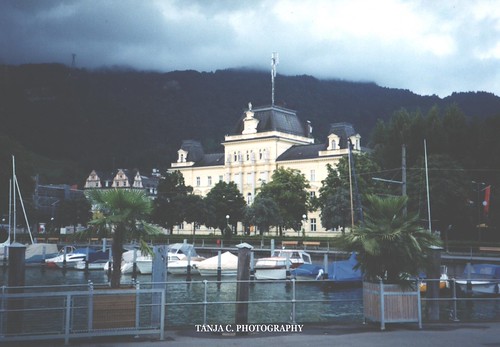
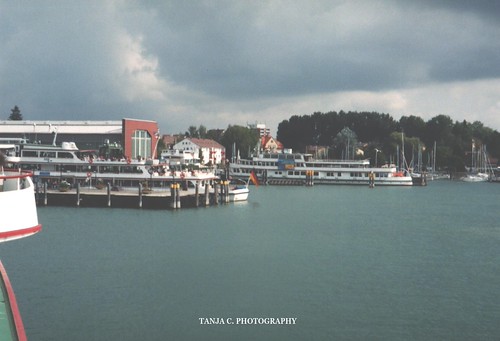
The concert was on Saturday, and we made our way down to Lindau by train on Friday. It was a nice relaxing ride. Once we passed Munich, we rode through the Alps. After changing trains and a 9-hour train ride, Kevin and I ended at the Lindau train station. When we walked out of the building, we were standing in front of the Lindau Harbor. It has been 17 years since I visited Lindau for the first time. And I couldn’t recall how aqua-colored the water of Lake Constance was. That evening, we got a taxi and rode from Lindau, Germany, to Bregenz, Austria. In Bregenz, we stayed at the youth hostel for the night.

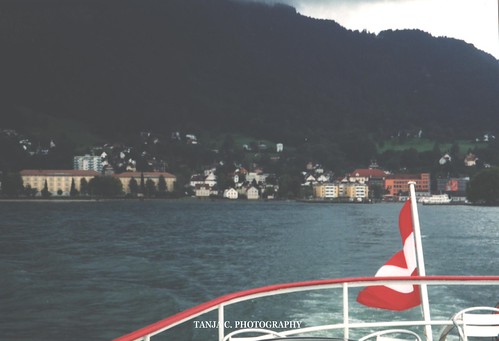
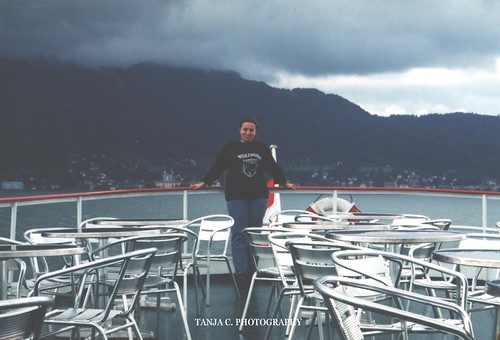
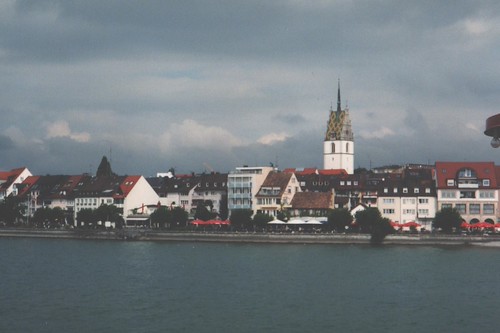
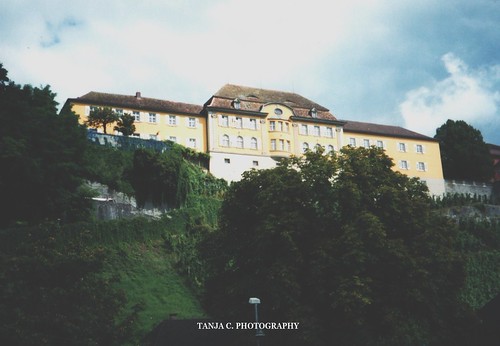
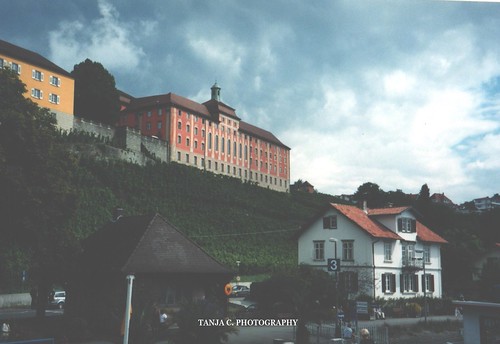
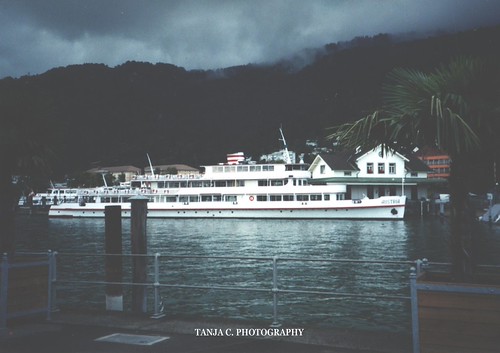
The following morning, Kevin and I got up early to have breakfast and make our way to the Bregenz Harbor. We had to make it back to Lindau and change boats to travel to Konstanz. We had a three-and-a-half-hour boat ride with several stops, including Friedrichshafen, Meersburg, and the island of Mainau in front of us. And Kevin wanted to explore Lindau for a little bit before it was time to go.

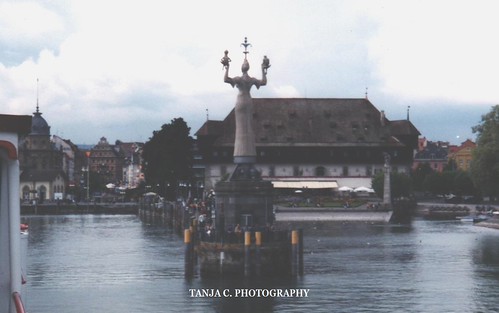
In Konstanz, we finally got off the boat. From the harbor, we had to walk less than a mile to get to our hotel. There we dropped off our luggage, put on a cap, and went to the festival. By that time, it had poured rain and we got wet. But it didn’t stop us from staying to see Alien Ant Farm, Papa Roach, and the German rock band “Die Ärzte”. Die Ärzte sing German songs, and so I had to translate the lyrics to Kevin. He thought these songs were awesome.

When Manson came on stage, we had clear skies. He was on stage only for an hour, which totally pissed me off because we spent all this time and money to go see him. However, I’m still a big fan of Marilyn Manson and have attended another two concerts in Germany. I know, he’s not everyone’s “cup of tea”. But that is what I like about him.

The following day, Kevin and I tried to cross the border to Switzerland. Since Konstanz lies on the German-Swiss border, it’s hard to tell when Germany ends and Switzerland begins as a tourist. (A year later, I finally crossed the border by the train station. I walked around a building and went back into Germany just so I could say, I’ve been on Swiss soil.) We went to the Konstanz train station and waited for the train to Stuttgart, where we switched trains and rode back to Würzburg.

On that weekend, we went through the whole state of Bavaria, traveled to Austria, made it back to Germany by boat, and traveled to Baden-Württemberg to go to a concert. And all these years, we are still not sure if Kevin made it to Switzerland on that day. What a trip!

Guns, God and Government Tour 2000/2001