2025 · Travel Tuesday

A Vacation At The Baltic Sea, Schleswig-Holstein, Germany ~ 1986

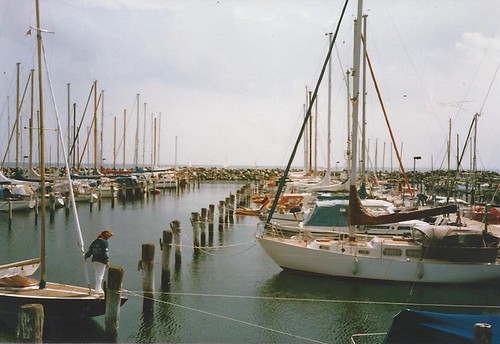
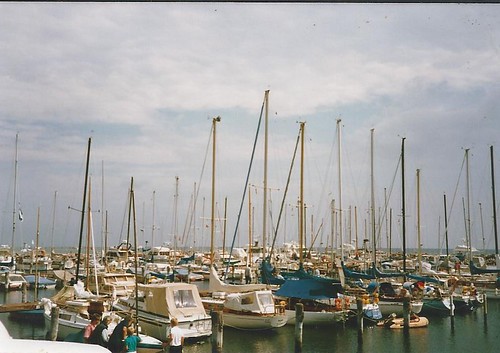
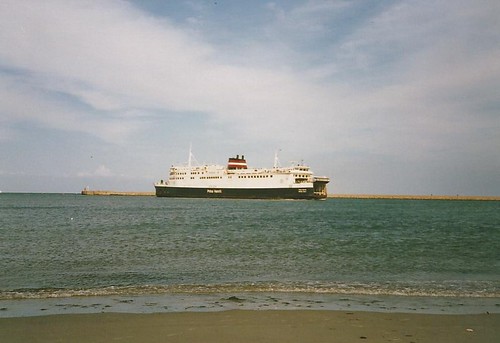
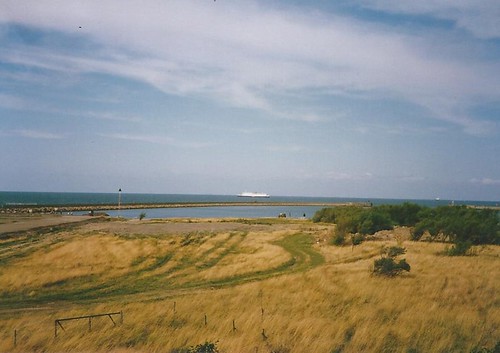
In the Summer of 1986, my Dad, his then-girlfriend, and I went on a vacation at the Baltic Sea (Ostsee). We spent two weeks in a vacation home in Niendorf. From there, we went to Timmendorf Beach and did a boat ride on the Trave River by Travemünde. One day, we drove to Lübeck. I wanted to see the famous Holsten Gate, but we didn’t make it there. When we spent some time in Travemünde, we saw the TT-Line, also known as Peter Pan. In 1986, the TT-Line Pty. Lfd. had only Peter Pan. The Nils Holgersson was renamed to Abel Tasman at that time. The line expanded with more ships. When we stepped outside the restaurant, we noticed how big the Peter Pan ferry was as it anchored right next to us. If we had our passports with us, we could have taken a day trip to Sweden and Finland while traveling in the Gulf of Bothnia. Oh well! We went to Puttgarden on Fehmarn and watched the Ferries on their journey to Denmark instead.
2025 · Travel Tuesday

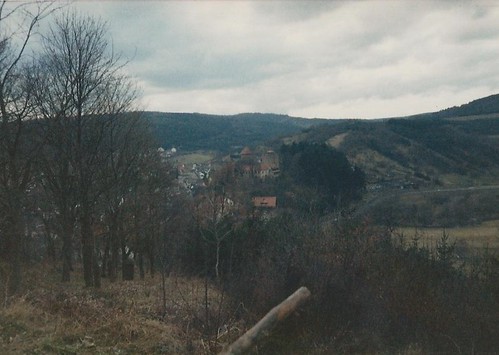
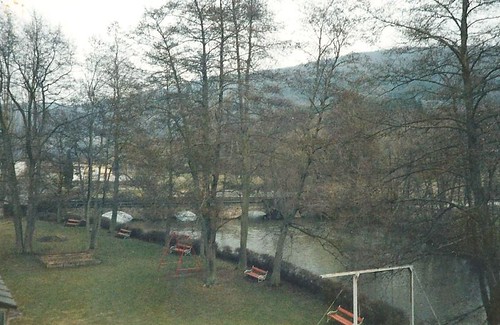
From Schaippach To The Rieneck Castle In Lower Franconia, Bavaria, Germany ~ 1986

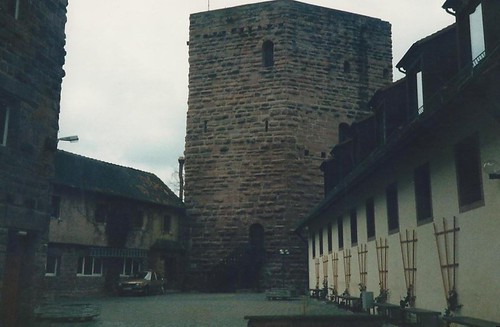
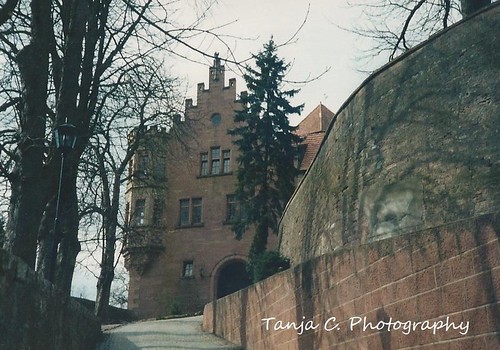
Rieneck Castle (German: Burg Rieneck) is a hill castle in the town of Rieneck, in Bavaria, southern Germany. It was built by Ludwig I, Count of Loon and Rieneck, around 1150. It is today used by the German Christian Guide and Scout Association. Rieneck Castle sits on a hill in the town of Rieneck, overlooking the Sinn River. It is located in the Spessart hills, in the Main-Spessart district of Bavaria, about 80 km east of Frankfurt.

In 1150, Ludwig I, Count of Loon and Rieneck, ordered the building of the castrum Rinecke on the northeastern boundary of his territory, intending to safeguard the lands of this aristocratic family against the neighboring lordships of Mainz, Würzburg, and Fulda. The little hill in the Sinn valley offered excellent conditions. There was only one direction where the castle required additional protection by a defensive ditch and offered as narrow a front as possible to attack. The latter can be clearly seen in the ground plan of the keep, the 19-meter-high “Thick Tower”, which is outwardly an irregular, seven-sided polygon, whose tip points towards the nearby hill. The castle complex initially consisted simply of a courtyard surrounded by defensive walls and the keep, with its 4 to 8-meter-thick walls. Inside the walls, half-timbered buildings were constructed as living quarters, store rooms, and stables. Of these, only what we now know as the “arched cellar” survives.

: https://en.wikipedia.org/wiki/Rieneck_Castle