Christmas Stroll Inspired by fresh-cut Christmas trees and the hot mulled cider served during Nantucket’s Christmas Stroll, the company president’s father, Mike Kittredge II, helped design this bright holiday scent.
Top: Balsam Fir, Pine Mid: Green, Moss, Sweet Base: Spice, Winter Air
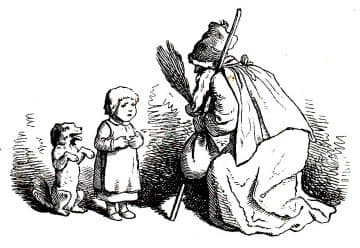
In German folklore, Knecht Ruprecht, which translates as Farmhand Rupert or Servant Rupert, is a companion of Saint Nicholas and is possibly the most familiar. Tradition holds that he was a man with a long beard, wearing fur, or covered in pea straw. Knecht Ruprecht sometimes carried a long staff and a bag of ashes and wore little bells on his clothes.
According to tradition, Knecht Ruprecht asks children whether they know their prayers. If they do, they receive apples, nuts, and gingerbread. If they do not, he beats the children with his bag of ashes. In other (presumably more modern) versions of the story, Knecht Ruprecht gives naughty children gifts such as lumps of coal, sticks, and stones, while well-behaved children receive sweets from Saint Nicholas. He can also be known to give naughty children a switch (stick) in their shoes instead of candy, fruit, or nuts, in the German tradition.
Ruprecht was a common name for the devil in Germany, and Grimm states that “Robin fellow is the same home-sprite whom we in Germany call Knecht Ruprecht and exhibit to children at Christmas …” Knecht Ruprecht first appears in written sources in the 17th century, as a figure in a Nuremberg Christmas procession.
According to Alexander Tille, Knecht Ruprecht represented an archetypal manservant, “and has exactly as much individuality of social rank and as little personal individuality as the Junker Hanns and the Bauer Michel, the characters representative of country nobility and peasantry respectively.” Tille also states that Knecht Ruprecht originally had no connection with Christmastime.
Ruprecht sometimes walks with a limp because of a childhood injury. Often, his black clothes and dirty face are attributed to the soot he collects as he goes down chimneys. In some of the Ruprecht traditions, the children would be summoned to the door to perform tricks, such as a dance or singing a song, to impress upon Santa and Ruprecht that they were indeed good children. Those who performed badly would be beaten soundly by Servant Ruprecht, and those who performed well were given a gift or some treats. Those who performed badly enough or had committed other misdeeds throughout the year were put into Ruprecht’s sack and taken away, variously to Ruprecht’s home in the Black Forest to be consumed later or to be tossed into a river. In other versions, the children must be asleep and would awake to find their shoes filled with either sweets, coal, or, in some cases, a stick.
◊◊◊◊◊
Krampus is a terrifying figure found in parts of Austria, Bavaria, South Tyrol, Slovenia, and Croatia, most probably originating in the Pre-Christian Alpine traditions. In Tyrol, he is also called “Tuifl”.
The Feast of Saint Nicholas is celebrated in parts of Europe on December 6. On the preceding evening, Krampusnacht, the wicked, hairy devil, appears on the streets. He sometimes accompanies St. Nicholas. However, Krampus will at times be on his own, visiting homes and businesses. Saint Nicholas dispenses gifts, while Krampus supplies coal and bundles of birch branches.
Europeans have been exchanging Krampuskarten, greeting cards featuring Krampus, since the 1800s. A Krampuslauf is a run of celebrants dressed as the beast and is still quite popular; many of the participants are fortified with schnapps. Over 1200 “Krampus” gather in Schladming, Styria, from all over Austria wearing goat-hair costumes and carved masks, carrying bundles of sticks used as switches and swinging cowbells to warn of their approach. In the past few decades, village Krampus associations have paraded without St. Nicholas at Krampus events throughout late November and early December.
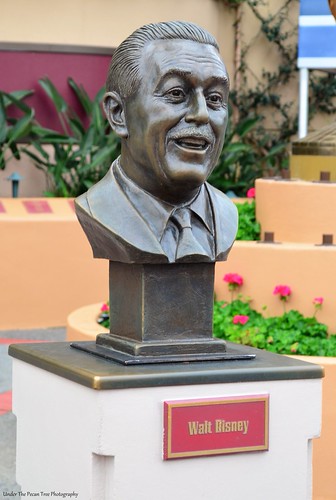
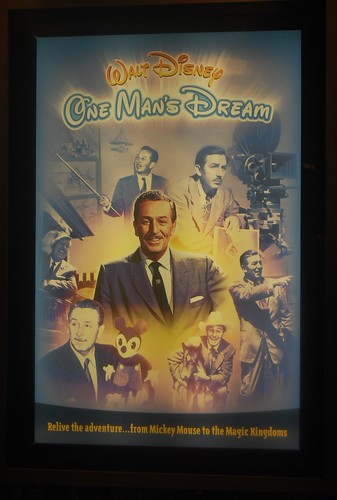
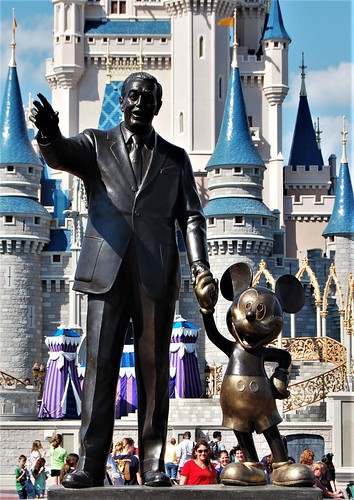
The famous Walt Disney (Walter Elias Disney) was born in Chicago on December 5, 1901. However, the talented Disney we know did not emerge until 1919, when he began his career as an illustrator. In 1928, Disney created Mickey Mouse, a character he sketched on a bus. Can you imagine one of the most famous characters in the world being created like that? Today, the cartoon character is the centerpiece of the entire Disney brand.
However, things weren’t always so easy for Disney. In 1923, his first business venture, Laugh-O-Gram Studios, went bankrupt. At the time, he had only $20 to start over, so Disney decided to head to Hollywood, where he created a few cartoon characters with his brother. Unfortunately, he wasn’t able to attain legal copyright for them. Then Mickey Mouse and other memorable characters such as Minnie Mouse, Pluto, Goofy, and Donald Duck arrived. From thereon, there was no turning back.
After a few years, Disney began developing feature-length cartoons such as Snow White and the Seven Dwarfs, Pinocchio, Fantasia, Dumbo, Bambi, Cinderella, and Mary Poppins. Disney made these animated creations during the 1940s to 1960s. Due to the success of these cartoons, it was not a surprise when Disney won 22 Oscars for his role as an American animator, film producer, and voice actor. But as we know, Disney didn’t stop there. He also opened theme parks in 1955. The Walt Disney World in Orlando, Florida, was under construction when Disney passed away. In 2018, the theme parks had already hosted over 157,3 million guests worldwide.






 Under The Harvest Moon