2025 · Autumn · DIY

Dollar Tree DIY-“Happy Fall, y’all!” Pumpkin Shelf Sitter

🍃🍂🍁🍃🍂🍁🍃🍂🍁🍃🍂🍁🍃🍂🍁🍃🍂🍁🍃🍂🍁🍃🍂🍁🍃🍂🍁🍃🍂🍁🍃🍂🍁🍃🍂🍁


With a limited budget at hand, I always have to consider purchasing decorations from Dollar Tree and repurposing them to my own liking. There are many tutorial videos on YouTube, which give me plenty of ideas. Last year, I started with some Halloween decor. I’m still learning. It is a lot of fun to be creative and to accomplish something that I can be proud of.

The last couple of days, I worked on this pumpkin shelf sitter. The top left image shows the original purchased item. And the top right image shows my own style. Below, I will describe the process in a few photos.
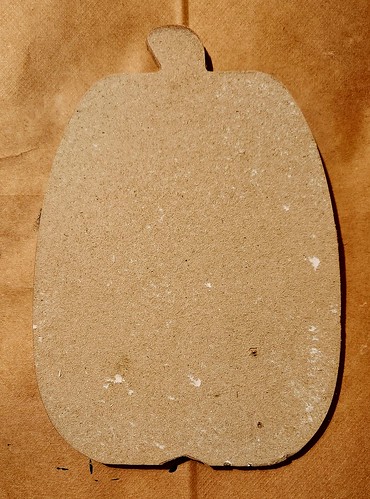
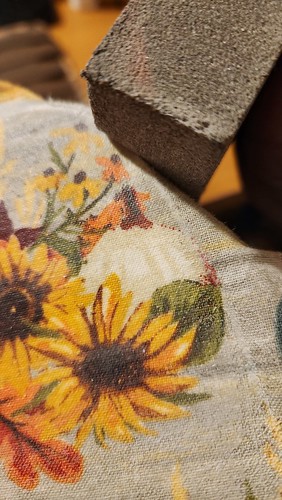
I separated the pumpkin pieces and peeled off the decorative paper. After sanding and cleaning both pumpkins, I gave them a coat of white chalk paint. I let the paint completely dry. I picked one of my Autumn fabrics and glued it on the front of the taller pumpkin (I cut the fabric into a rectangle to the size of the pumpkin. It’s better to leave some fabric over the edges, which can be trimmed later.) Once the fabric was spread on the pumpkin, I brushed another coat of Mod Podge on top of it. Then I let it completely dry. The dried Mod Podge gives the fabric a paperlike texture, and the edges can easily be sanded off. Once the edges were sanded and cleaned with a baby wipe, I lightly tapped some antic wax around the edges of the pumpkin. (I always start with the wax lightly and add more as I go. This way I avoid getting too much wax on the fabric because it is much harder to correct it afterward.)

While I waited for the tall pumpkin to dry, I always worked a little bit on the smaller pumpkin. I mixed “Pumpkin Orange” with a couple of drops of “Chestnut” (Apple Barrel) and gave the pumpkin two coats. I always let one coat dry before I add another coat. Once the paint was dry again, I used my antic-wax around the edges. With a tissue and a small amount of antic wax, I drew the grooves to make the pumpkin look more realistic. Later, I stenciled “Happy Fall, y’all!” on the smaller pumpkin.

Before I glued the pumpkins together, I added a couple of Jenga blocks as risers. This gives the pumpkins a greater optical depth than being directly glued on top of each other. I still had a raffia bow, and I hot-glued it to the smaller pumpkin. For the tall pumpkin, I used burlap ribbons to make a lazy bow. And the new pumpkin shelf sitter is done.

🍃🍂🍁🍃🍂🍁🍃🍂🍁🍃🍂🍁🍃🍂🍁🍃🍂🍁🍃🍂🍁🍃🍂🍁🍃🍂🍁🍃🍂🍁🍃🍂🍁🍃🍂🍁
2025 · Wildlife Wednesday

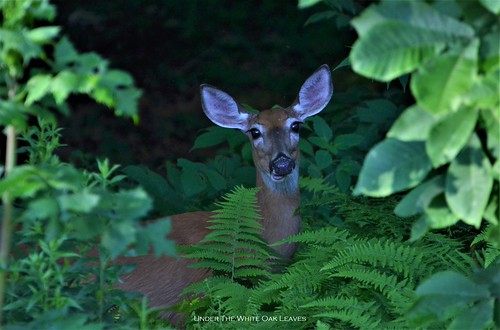
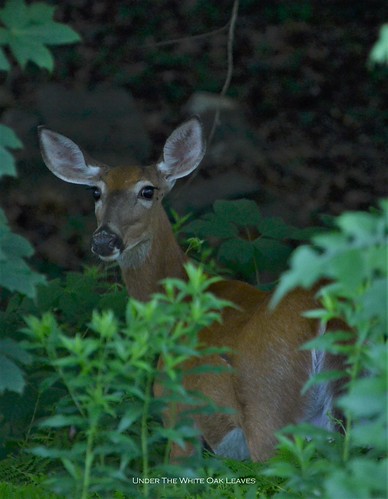
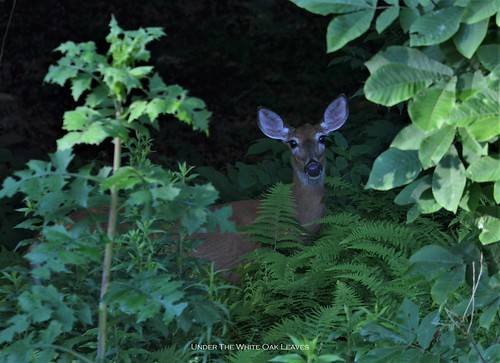
White-tailed Deer (Odocoileus virginianus) 🦌

The white-tailed deer, also known commonly as the whitetail and the Virginia deer, is a medium-sized species of deer native to North America, Central America, and South America as far south as Peru and Bolivia, where it predominantly inhabits high mountain terrains of the Andes. It has also been introduced to New Zealand, all the Greater Antilles in the Caribbean (Cuba, Jamaica, Hispaniola, and Puerto Rico), and some countries in Europe, such as the Czech Republic, Finland, France, Germany, Romania, and Serbia. In the Americas, it is the most widely distributed wild ungulate.

In North America, the species is widely distributed east of the Rocky Mountains as well as in southwestern Arizona and most of Mexico, except Lower California. It is mostly displaced by the black-tailed or mule deer (Odocoileus hemionus) from that point west, except for mixed deciduous riparian corridors, river valley bottomlands, and lower foothills of the northern Rocky Mountain region from Wyoming west to eastern Washington and eastern Oregon, and north to northeastern British Columbia and southern Yukon, including in the Montana valley and foothill grasslands. The westernmost population of the species, known as the Columbian white-tailed deer, was once widespread in the mixed forests along the Willamette and Cowlitz River valleys of western Oregon and southwestern Washington, but current numbers are considerably reduced, and it is classified as near-threatened. This population is separated from other white-tailed deer populations.

Texas is home to the most white-tailed deer of any U.S. state or Canadian province, with an estimated population of 5.3 million. High populations of white-tailed deer exist in the Edwards Plateau of central Texas. Michigan, Minnesota, Iowa, Mississippi, Missouri, New Jersey, Illinois, Wisconsin, Maryland, New York, North Dakota, Ohio, and Indiana also boast high deer densities. The conversion of land adjacent to the Canadian Rockies to agricultural use and partial clear-cutting of coniferous trees, resulting in widespread deciduous vegetation, has been favorable to the white-tailed deer and has pushed its distribution to as far north as the Yukon. Populations of deer around the Great Lakes have expanded their range northwards, also due to the conversion of land to agricultural use, with local caribou, elk, and moose populations declining. White-tailed deer are crepuscular, meaning they are most active during the dawn and dusk hours.

:https://en.wikipedia.org/wiki/White-tailed_deer