

2025 · National Day Calendar

World Photo Day 2025 🎡📸

Louis Daguerre was born on November 18, 1787, in Cormeilles-en-Parisis, France. His family was middle-class, and he grew up during a time of great political upheaval with the turmoil that was the French Revolution. The revolution involved the common people versus the bourgeoisie, brought on by King Louis XVI’s poor economic policies. The poor wanted to improve their standard of living, and the ruling class wanted to hold onto the feudal regime. These events often affect the arts, as they inspire artists to create work that encapsulates the era, and for young Daguerre, that was drawing.

In 1800, despite having a limited formal education, Daguerre was a natural artist, and at 13 he became apprenticed to an architect, where he learned hands-on the mechanics of the art and the science of designing structures. This created the foundation for his understanding of how objects were built. Just four years later, Daguerre moved to Paris to study and practice scene painting for the opera. 

In the early 1820s, Daguerre made a breakthrough. He and his fellow collaborator invented giant, translucent paintings illuminated to simulate movement and other effects, and it was known as the diorama. Crowds would gather and watch these displays of landscapes and colors, but in the next decade, he fell on hard times and lapsed into bankruptcy because of the costliness of his invention.

Daguerre had known Joseph Nicéphore Niépce, who had produced the world’s first permanent photograph in 1825 to incorporate into his dioramas. Niépce died in 1833, and Daguerre continued experimenting with photography and his dioramas. After combining chemicals and silver plates, he came up with the daguerreotype process and patented it in 1839 as a “gift to the world”. 

After this bold union, photography continued to evolve and capture moments of our lives. In 2010, professional photographer Korske Ara founded World Photo Day to inspire people to take photos that mean something to them.

:https://nationaltoday.com/world-photo-day/

2025

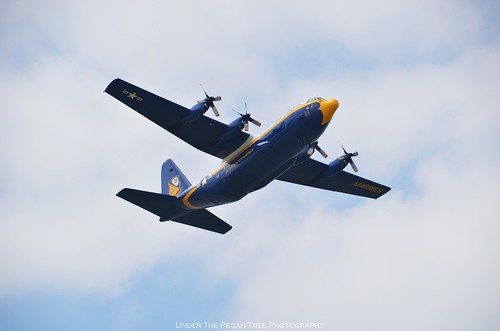
National Aviation Day 2025 ✈

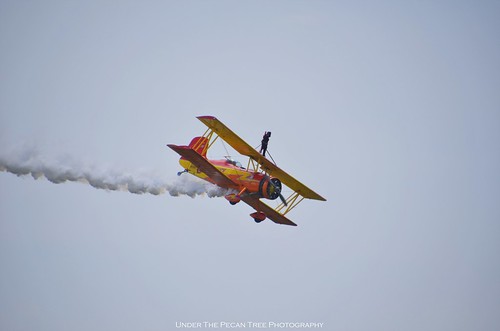
National Aviation Day on August 19 should make us stop and think about the power of flight. Yet, some scientific and technological marvels become so commonplace that we seldom take the time to re-examine their revolutionary impact with an open and inquisitive mind.  In just a handful of generations, aviation went from pure, pie-in-the-sky speculation to a mundane reality that inspires about as much wonder as a trip aboard a Greyhound bus.

It’s that ho-hum attitude to the miracle of flight that makes National Aviation Day such an excellent national observation.  Plus, it takes place on  Orville Wright’s birthday!

:https://nationaltoday.com/national-aviation-day/

2025 · National Day Calendar

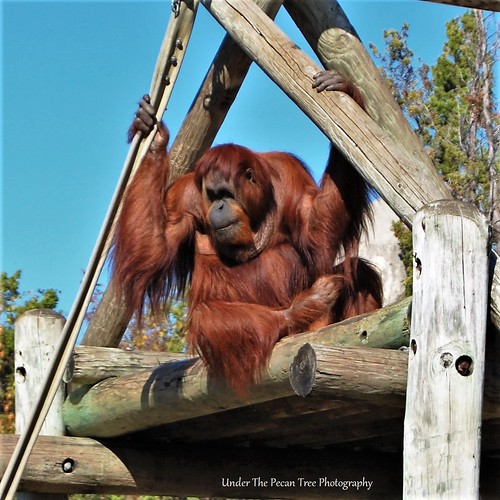
International Orangutan Day 2025 🦧

Orangutan at the Fort Worth Zoo

The exact year that International Orangutan Day was established is uncertain. The day is marked, however, to save species that are on the edge of extinction. The goal of International Orangutan Day is to raise awareness about the predicament of this species, which has progressed from endangered to critically endangered. Orangutans have been around for millions of years and are thought to be the ancestors of gorillas. They are large apes that spend the majority of their time in trees and are only found in the jungles of Borneo and Sumatra. The two species that live there were formerly thought to be the same.

Further research has shown that they are two distinct species that separated some 400,000 years ago. Orangutans have enormous arm lengths that reach about seven feet from tip to tip, which is impressive given that they only stand around five feet above the ground. When orangutans stand up straight, their hands are almost touching the ground. Their long arms complement their arboreal lifestyle, letting them move from tree to tree and construct shelters from the canopy’s massive leaves. Because orangutans spend 90 % of their time in the treetops looking for food, deforestation is highly damaging to them. Orangutans are mostly herbivores, but omnivorous orangutans will eat bark, insects, and even meat if available.

The tropical rainforest had been destroyed due to the farms’ improper management. Furthermore, the farmers consider the orangutans to be a nuisance and either kill them or burn the forest down. There have only been 20,000 survivors since 2006, but there should be more now. As a result, deforestation is the fundamental cause of such a tiny number of orangutans, and if it continues, the big apes will become extinct sooner. Raising awareness by commemorating International Orangutan Day can assist in increasing the possibility of this endangered species being rescued.

Unfortunately, humans are the greatest threat to the survival of orangutans. Deforestation, for example, encroaches on their habitat. In addition, illicit hunting claims the lives of 3,000 orangutans each year. Some wildlife specialists believe the orangutan will become extinct in the wild over the next 50 years. However, several organizations are working to conserve orangutans. The Centre for Orangutan Protection, the Sumatran Orangutan Society, The Orangutan Project, Orangutan Outreach, and the Humane Society are a few of these organizations.

: https://nationaltoday.com/international-orangutan-day/

2025 · Travel Tuesday

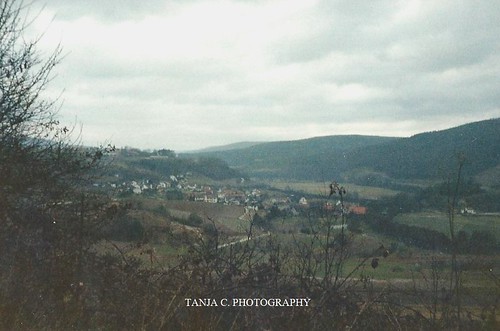
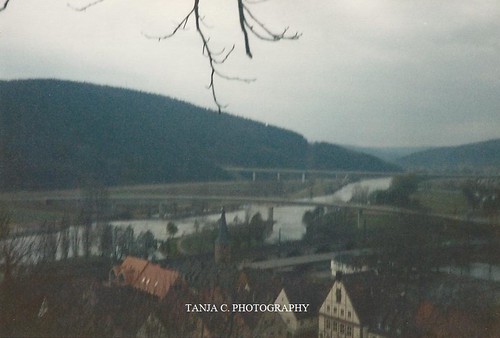
From Schaippach To Gemünden In Lower Franconia, Bavaria, Germany ~ 1985

When I was 11, my schoolmates and I went to a school camp in Schaippach an der Sinn with our teacher. In the mornings, we had regular school. But school started at 9 AM and ended at noon. And in the afternoon, we hiked several miles to learn more about regional history and geography. There was still plenty of time to hang around the building or sit in the story area and write a letter or postcard for the family at home. We also had responsibilities like taking care of the dishes for breakfast, lunch, and dinner. Make our beds and go to bed on time. Sleeping was another story when being in a room with nine other girls. After five or six days, we rode the bus back home, where our parents, in my case, grandparents, were waiting in front of the school to pick us up. At home, we had a lot of stories to tell about that week at camp.

On one hike, we went from Schaippach to Gemünden. Our teacher was always talking about the merging of the rivers Sinn and Saale into the River Main (pronounced: mine). A river merging with another river into a larger river means “münden” in German. Therefore, the town at the three rivers is named Gemünden. So, we students wanted to see it and hiked to the exact place where the merging of the rivers can be viewed from that spot.

Gemünden is about 25 miles (40 km) NNE down the river from my hometown, Würzburg, and located in the region of Main-Spessart in Lower Franconia, Northern Bavaria, Germany.