
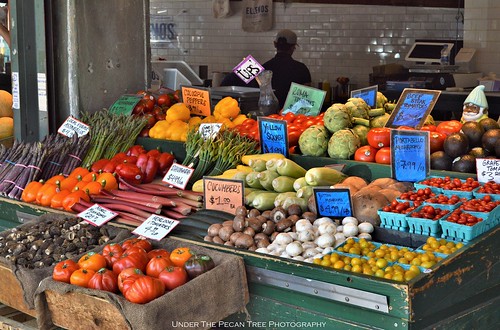
A farmers’ market is essentially a place where food is sold directly from the farmer to the consumer. This means there are no middlemen, nor is the food kept in freezers for days and weeks before it reaches someone’s kitchen. And since the fruits, vegetables, and meats from a farmers’ market are completely organic and free of preservatives and pesticides, they are healthy and taste delicious. The produce is not genetically modified and is extremely nutritious. Seeing the benefits of organic produce, the U.S. Department of Agriculture proclaimed the first National Farmers Market Week in 1999.
However, the history of organic farming is more complicated than we can imagine, since there was a time when the world only had organic food. The need to opt for chemically grown produce emerged much later. From around 1300 to 1400 B.C., mixed-crop cultivation and animal husbandry were the norm. The only problem experienced by farmers was the slow growth rate of fruits and vegetables, as well as the constant attacks of pests. To counter this issue, research during World War II led to the development of a new class of synthetic chemical pesticides in 1945. After this innovation, organic farming drastically decreased since it was hard to maintain and produced limited crops every season.
In the coming decades, researchers revealed the negative effects of consuming food grown using pesticides, and interest in healthier alternatives rose again. During this period, governments across the U.S. began providing funding to farmers’ markets to re-advertise organic produce.
Resource: https://nationaltoday.com/national-farmers-market-week/
 Under The Harvest Moon